
When we moved to Japan… originally for only two years… we kept our house in the United States. Our daughter moved into it, and agreed to take care of our pets while we were gone. My husband was “on loan” to the company in Japan, and we fully intended to return to the US when his job assignment in Japan ended. After 4 1/2 years there, we moved back to Georgia, our daughter and her husband moved into their own home, and we returned to our house and kitties.
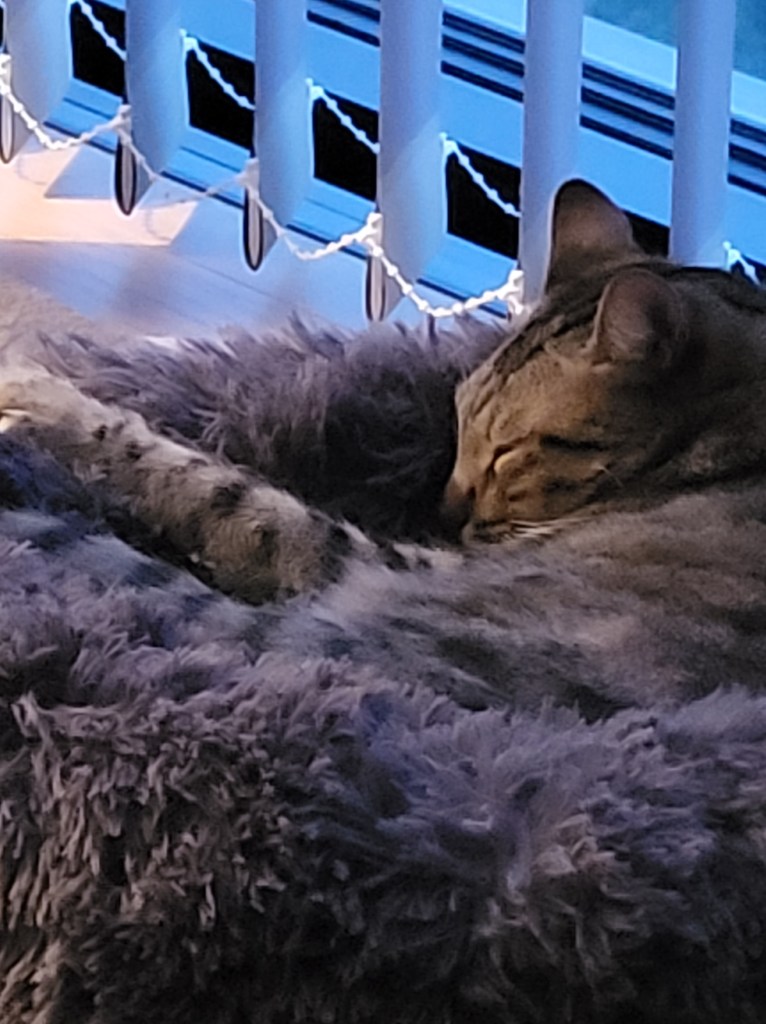
With this move to the UK, the situation was a bit different. Although the companies are all related, my husband was no longer “on loan,” and had to actually “retire” from his US company to accept the new position in London. Same job, but different company. Our daughter, having her own home and pets, could no longer take care of ours. We sold almost everything, and this necessitated moving our pets… 3 kitties… with us.
This was a big step, and an enormously complicated process. Once we had the firm job contract in hand… back in January of 2023… we began researching how to move our kitties to the United Kingdom. There is quite a lot of information online… and a few different methods. Some are less “hands on” and more expensive. Some are more “do-it-yourself”. We ended up doing a more middle-of-the-road method… intermediate in terms of cost, and complexity.
Regardless of which method you go with, it all starts with having your pets properly vetted. For the UK (and all countries have their own standards and requirements) this means that the pets must be microchipped. After microchipping, they must be rabies vaccinated. Timing is important. You cannot enter the UK until three weeks after the vaccination, but also within the one year time frame that the vaccine is good for. If you are moving puppies or kittens, age also comes into play.
Also… you need to find a vet who is able to fill out the required paperwork to be submitted to the USDA for approval in order to get the stamped official health certificates needed for the country you are entering. Not all vets will do this paperwork because it is tedious and time consuming. And… expect to pay extra for the vet to fill out the paperwork. Our vet charged $400 to do the paperwork for our three cats. I have read of other vets charging much, much more than that.
Again, timing is critical. The final health check for the animals must be within 30 days of the move date. But, the paperwork has to be submitted to USDA within 10 days of the flight. The paperwork can be submitted electronically by the vet, and you can pay for overnight service to receive the health certificates in time for the flight. Our vet was actually out of town until 7 days before our flight. She submitted the paperwork electronically, there was a correction that had to be made (electronically) and we received our health certificates the day before our flight. I cannot stress enough how important it is to find a competent vet to do the paperwork. Our vet took care of all of this for us. We supplied all the pertinent information (past vet records included), she submitted the paperwork, and took care of corrections, and had the certificates overnighted from the USDA directly to us.
We made our airline reservations over the phone. All airlines have their own requirements when it comes to traveling with pets. Some limit the number of in-cabin pets on a flight. We flew Delta, and knew that they limited the number of animals in-cabin to five. We made our reservations as soon as possible with that in mind. Also, Delta requires that you have one passenger per pet. We arranged for our daughter to accompany us to take the third kitty. There are also important size requirements for both the animal and the carrier. In-cabin pets must have an airline approved soft-sided carrier that will fit under the seat, and it must have sufficient ventilation panels. Pretty much, the in-cabin pet is limited to 15 pounds or less, and must be able to move and turn around in the carrier. Larger pets must be crated and moved either as cargo, or excess baggage, down in the hold of the aircraft. Delta charges $200 for each pet to fly in-cabin. No pets can fly in Delta One, and they will only rarely allow a pet in anything other than the Economy section. We opted to select seats near the back of the aircraft, close to the lavatories… easier cleanup if that became necessary.


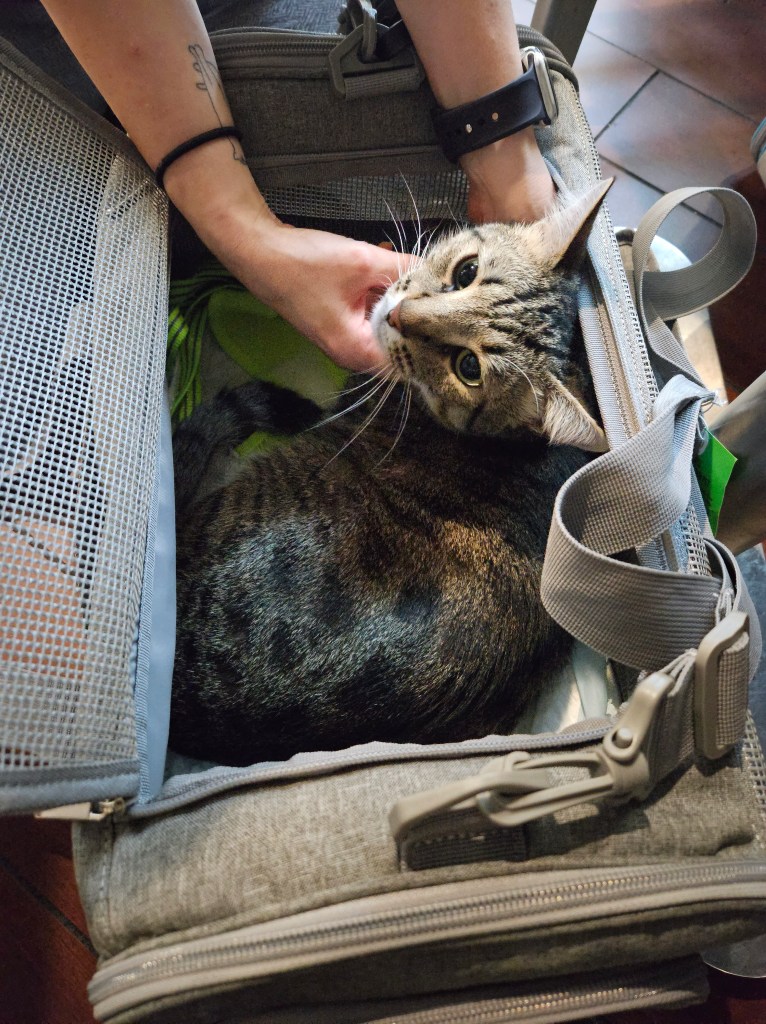
Another complication with moving pets to the UK is that they will not allow pets to enter the country in-cabin. So they have to be placed in the hold of the aircraft, or you have to fly to another location… Paris, Dublin, or Amsterdam… and then arrange travel into the UK either by ferry or through the Eurotunnel from France. We opted for Paris… but then this necessitated having a health certificate for the EU as well as the UK. Our vet did both sets of paperwork for us. We landed in Paris, and hired a pet transport company to drive us through the tunnel to London.
Alternatively, you can fly with pets in the hold, but then upon arrival at Heathrow Airport, London, the pets have to have a reservation for Pet Reception… which can be booked out for weeks in advance. It all just seemed much easier to fly to Paris, and get either a pet transport, or a pet-friendly taxi service to take us on into London. No pets are allowed on the EuroStar (chunnel train), so that is not an option.
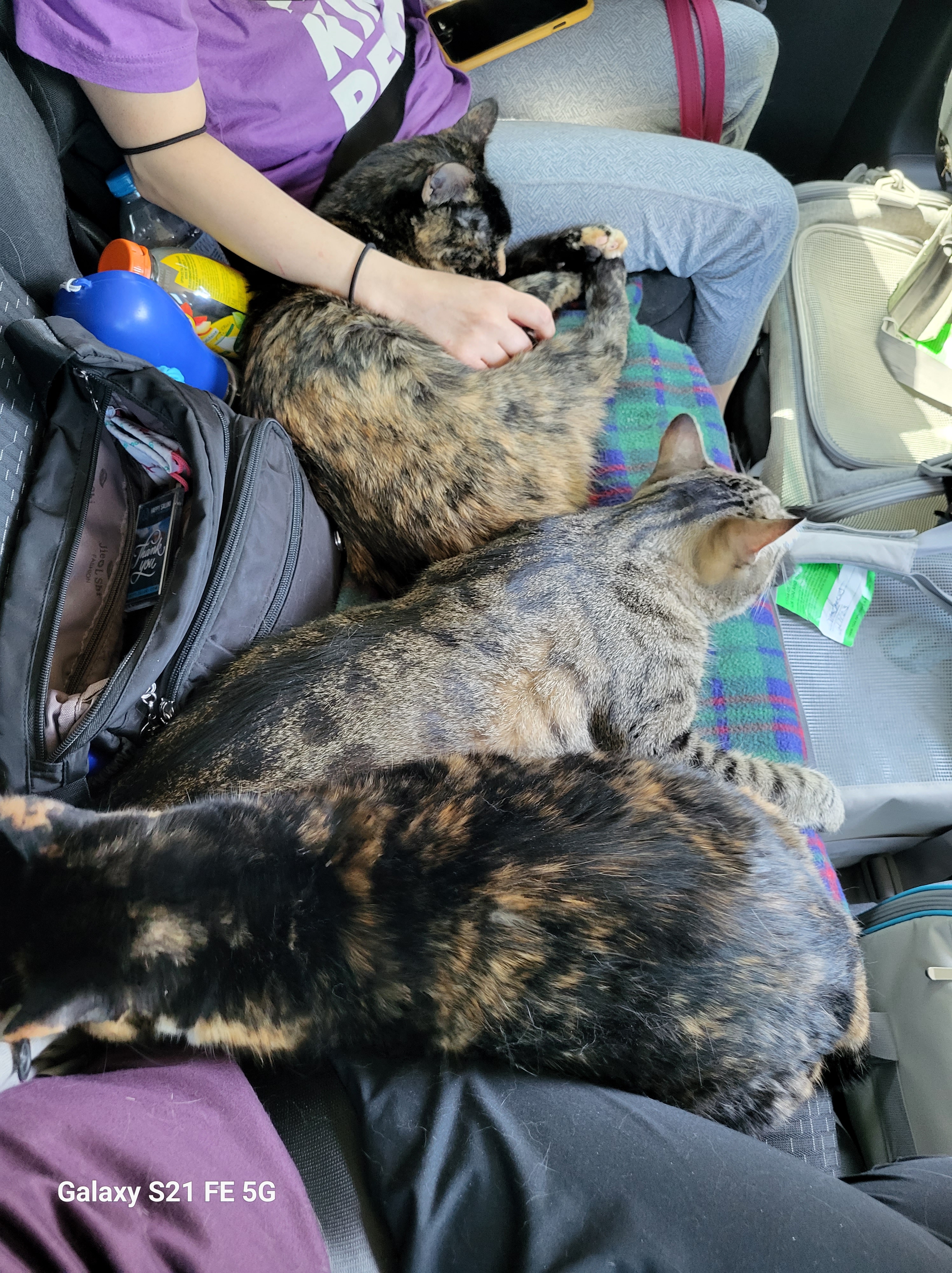
We opted to hire Happy Saluki Pet Transport to drive us to London. Once we landed at Paris, and took our kitties through EU Customs (they checked our USDA EU health certificates), we connected with our assigned driver through WhatsApp, and she picked up us, our luggage, and our three kitty carriers at the curb. Kim was wonderful, and walked us through the rest of the process into London. She went with us through Pet Reception at the entrance to the Eurotunnel, where they scanned our kitties’ microchips and checked their UK health certificates, helped us through immigration into the UK, and drove us onto the Eurotunnel train. After a 30 minute trip on the train, she drove us on to London… right to our apartment door. In the van, we were able to get the kitties out of their carriers. After 10 hours confined in a small space, and in noisy airports and an airplane, the kitties all were ready to get out. All three curled up together on a blanket on the seat, and slept the rest of the way to London.
We paid about 1300 pounds (~$1600) for Happy Saluki services… but it was money well spent. The drive from Paris to London was the most relaxing and peaceful part of the whole pet-moving process. I cannot thank Kim and Happy Saluki enough for all that they did to help us. I started emailing with Happy Saluki in January, and they were always very responsive and reassuring about our travel plans.


As I said, there are other options. We checked into having our kitties moved by a “pet broker”… who would have taken care of the paperwork, met us at the airport, and taken over the details of putting the kitties into the cargo hold. They would have arranged for pet reception at Heathrow, and even delivery to our flat in London. I called three such companies, and got estimates of $5000+ to move our three kitties. Also… another alternative is a pet charter. UK will allow in-cabin pets (of all sizes) on chartered aircraft arriving at Heathrow. The chartered flights, however, run about $10,000. You arrange to be included with a charter group of passengers all flying their pets into the UK.
I know this all sounds like a chaotic mess. As I started to write this, I had trouble putting it into a logical order… and then realized that it was because this pet moving process has no logical order. There is no step 1, step 2, step 3, because everything ends up being interrelated with weird timing and illogical requirements. But… in the end, it all got done… even as stressful and crazy as it sounds.
All in all… with the choices we made, our overall cost per kitty came to about $1000. It is definitely not cheap to move pets internationally, but we are happy we did. All three have settled in nicely to our 20th floor high-rise flat in London.


 Four Years in Japan ... and now Three Years in London