Baby Ducks…

It has been a busy spring and we have been away from the blog for a few weeks. My husband was gone on business for a couple of weeks, and after that we had friends and family come to town, so we played tour guides. Our kids and our grandson visited, and we got in some fun babysitting time and playground time while the grownups did… grownup things. Then we had a week back in the US for our youngest daughter’s graduation. Now as the schedule settles back to normal for awhile, we are heading from early spring toward another hot and humid Tokyo summer.

One of our hobbies here is bird watching. Something that I also enjoyed back in the US, but it is a new hobby for my husband. Living so close to the bay, we mostly see water birds here — ducks, gulls, and cormorants. In the winter, we have many different species of ducks that live sheltered along the canals. But these ducks start moving on to their breeding grounds in early, early spring, leaving behind a contingent of Spotbill ducks that prefer to hatch and raise their babies along the canals.

And so it is that we are now seeing the first ducklings on the canals. I went out for a run earlier this week, and spotted two batches of baby ducks sitting on the riprap where the effluent comes in from the water treatment plant. The ducks love this location so much, that we have come to call it the “Duck Bridge” during the summer months. (Although, at night we call it the “Bat Bridge” because so many bats fly and swoop around it, and in the winter — along with the many species of wintertime ducks — it is the “Seagull Bridge” because of the huge flotilla of gulls that like to hang around there.)

We always look forward to baby duck season on the canal, and we see babies of various ages all through the summer and even into early fall. Lots and lots of little Spotbills get their start along these canals. The two batches of babies I saw on Monday, were probably about a week apart in age. There were four in the older bunch, and nine(!) freshly-hatched babies in the younger group.

Alas — nature can be cruel, and on Tuesday, I could see there were fewer babies in the younger group. I couldn’t count them accurately, because they were still sheltering under mama duck most of the time. Such tiny little babies often fall prey to the predators along the canal. There are Black Kites flying among the high-rise buildings, and cormorants that could easily snatch a tiny baby duck or two. Also, we see many large fish in the canal, so the tiniest baby ducks often have a tough time surviving.

Today, as I walked along the canal, I found the older group of four baby ducks sitting on the rocks, but only one of the younger ducks was out on the rocks. Maybe they were there somewhere — resting on the rocks in a sheltered place where I couldn’t see them — while their one brave sibling sat all alone on top of the rocks. I hope they were still there somewhere, but I am doubtful.

Life can be harsh, and I am sad about the loss of this first batch of babies, but I am sure we will be seeing many more baby ducks here this season.

Sharing the Expat Experience — Part 2

IMG_1910
Swan on the outer moat at the Imperial Palace in Tokyo

And now for the “she” perspective on the topic of “Sharing the Expat Experience“…

My husband is right in that the decision to accept an expat assignment should not be taken lightly and should be thoroughly discussed and considered. And we did just that prior to accepting. We had actually thought about doing this sort of assignment for several years — even while our children were still at home with us — but the right opportunity never came along until this job in Tokyo. And, we approached this job as an opportunity not just for “him” and his career, but as an opportunity for “us” as a couple and a family.

I believe we have grown closer as a couple through this experience. We have done a lot of traveling together, and seen a lot of places we would never have had the chance to see otherwise. We have lived in a culture and country very different from our own. And, we have always viewed this expat life as an adventure for us to experience together. But it is certainly not without difficulties and some sacrifice.

We both gave up — at least temporarily — our home, our cars, our pets (who are being well cared for by family members, I want to add.) My husband gave up his position at his company in ATL, and though they promise he will have a position to go back to, he has no guarantee of what that job will be. I gave up my job — permanently. When we go back, I will have to find another job.

He has a place here. A job to go to everyday, people to work with who he can interact with. People who depend on him and respect him for the job that he is doing. I have an apartment… lol. I do the household jobs… the laundry, the cleaning, the cooking, the shopping. I did those things back home as well, but here I have no outside job to go to (visa requirements make a job more difficult, and language is an added complication), and I don’t have a very large social circle. I have made friends with other expat spouses in the company, but we only see each other a few times per month.

The language differences can be isolating. I am learning Japanese, but I am still a long way from being effectively conversant. Aside from simple polite exchanges at the stores and restaurants — konnichiwa, ohayo, onegaishimasu, arigato gozaimasu — my interaction is limited. Even at the spouses’ luncheons, I am the only American, and one of few native English speakers.

I don’t say these things in complaint — far from it. But just to emphasize the difficulties attached to this kind of an assignment. And… maybe… to also suggest that it takes a certain type of personality to be able to do this. My husband and I are both introverts who don’t mind having a little bit of “alone time.” We do quite well spending time with each other, and don’t really need a large social circle. Just my opinion.

One of the other expat spouses I have met, lives most of the time at her home in Mumbai, and only comes a few times a year to visit her husband here in Tokyo. She told me last year that as soon as she retired from her job in India, she would move permanently to be with her husband. But since then, she has reconsidered. Though she has retired, she now says that she just can’t give up her social group and her friends in India. She says that she wouldn’t have anyone to talk to here. So, she and her husband will continue as a long-distance couple.

It certainly is a trade-off, and I understand her point of view completely. We all have to do what works best for ourselves and our relationships. Everyone is different. But for me — for us — it works better to be together. Even with occasional feelings of isolation. And even with that occasional two-week business trip when I must stay behind by myself… lol.

IMG_1908
One of my new hobbies since coming to Japan is photography. Water photo on the moat at Imperial Palace, Tokyo.

IMG_1907

Sharing the Expat experience

It’s the “he” part of the blog team, writing this entry from a hotel in London. My job provides me with the opportunity to travel, which was an important consideration in my decision to accept the expat assignment. I viewed the job as a chance for me – and my wife – to see parts of the world we probably wouldn’t otherwise see. Unfortunately, on this two-week business trip, my spouse wasn’t able to come along.

IMG_4265 (002)
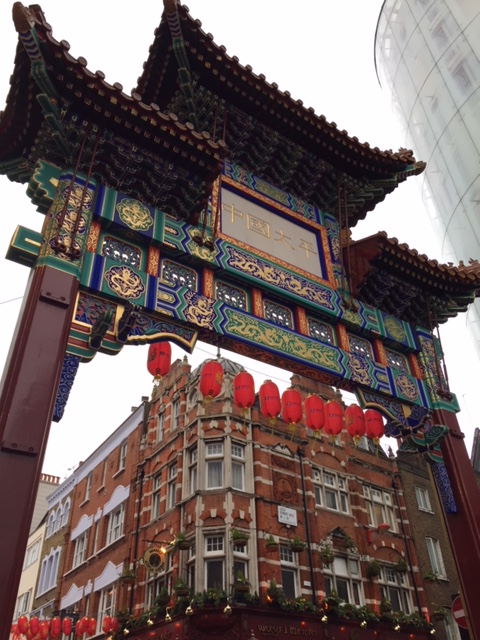
Chinatown in London. Sightseeing isn’t much fun when on a business trip without my wife

I have found that there is a wide variation in how expats share their experience with spouses and family. In my company, we have a number of people from other countries who are assigned to Japan, typically for two to five years. Some, like me, share the assignment with a spouse. One colleague has included his children, who are learning about the world through international school and living in a foreign land.

Several colleagues, however, participate in their assignments while their spouse remains at home. Perhaps they didn’t want to uproot children from their schools, or the spouse has a job that couldn’t be abandoned, or the spouse just didn’t want to leave “home” for such a long time. For these colleagues, sharing the expat experience with their spouse consists primarily of video calls, and periodic visits.

For me, the “long distance” relationship was never an option. Had my spouse not been able to move to Japan with me, I would not have accepted the assignment. It has turned out to be an amazing opportunity to share our lives and our experiences. We’ve become closer as a couple, and the assignment has been a rewarding one for us both.

Anyone considering an expat assignment should think very carefully about what’s best for their personal relationships. For a spouse, life in Japan can be challenging. It is often not practical for a spouse to work, due to visa requirements. Being a spouse in a foreign land can be isolating, with language and cultural differences making social interactions more difficult. Although Tokyo has a large expat community, it isn’t always easy to make close or lasting relationships with other expats. Being a spouse in a foreign city can sometimes be a lonely experience.

The point, I think, is that being an expat couple is a complicated situation, and not one to be entered into without much thought and discussion. Our experience has been that the positives significantly outweigh the drawbacks.


Suddenly Springtime

The weather has turned warm here in Tokyo. From chilly 40’s and 50’s, we have jumped up into the warm and pleasant 70’s. Flowers are blooming and the trees are leafing out and turning green. In Japan, the quintessential symbol of springtime is Sakura. The Sakura — cherry trees — have been blooming for a couple of weeks now, and all the parks have been filled with people walking under the trees, stopping to take photos of the blossoms, and picnic-ing with friends and family under the beautiful trees. Hanami — hana meaning “flower,” and mi (verb, mimasu) meaning “to watch” — is one of the most anticipated and celebrated times of the year for the Japanese.  Sakura-themed products abound… from simple product packaging, to pink versions of foods and drinks.

Now, however, the trees are “snowing” flower petals all over the place, and the Japanese have a word for this too: Hanafubuki — again, hana meaning “flower,” and fubuki, meaning “snowstorm.” The petals pile up on the sidewalks and under the trees like pale pink snowdrifts, and they float along on the rivers and canals in large pink swirls. In Japanese Buddhist tradition, this cycle represents the ephemural, and impermanent nature of this beautiful life experience, and catching a falling petal is supposed to assure good fortune.

There are still plenty of the late blooming varieties of Sakura displaying their pretty petals, but Hanami Season 2018 is waning. The blossoms will all fall, and we will move on to other beautiful flowers and trees… next the azalea, then wisteria, hydrangea, and on and on until the colorful leaves fall next autumn. The lesson here? Maybe… that we cannot hold on to the beautiful things in life. They each have to be enjoyed in their moment.

Spring tulips in Hibiya Park.

And other springtime blooms…


Saturday in Tokyo

It’s the “he” part of the blog team, just finishing a typical Saturday morning in Tokyo. Coffee, then a 3-mile run — not much different than we would do in the US.

Then brunch — but rather than an Egg McMuffin or Starbucks latte (both of which you can get in Tokyo, by the way), we opted for our favorite soba noodle shop. Steaming hot bowl of noodles — tasty and less than 1,000 yen ($10) total for the two of us.

Rounding out the morning was the daily trip to the grocery store. Back in the US, we’d take the car and load up on groceries once or twice a week. Multiple shopping bags, lots of refrigerator and freezer space. Here in Japan, with a tiny refrigerator and limited by what we can easily carry, the trips are much more frequent.

IMG_4202That’s a bit different, but we’ve come to adopt it as routine. And, after a couple of years in Japan, we can even read some of the labels on the packages.


The First Day of Spring???

It is Wednesday, March 21st… the first day of spring. Here in Tokyo, that is a holiday — Spring Equinox — and most people are off of work, and school. I think it is nice that Japan celebrates the seasons by declaring a holiday. It is just another way that they show appreciation to nature, and also… to workers all over the country.

My husband is off of work today, and when he is not working, we like to spend our time out and about exploring our (temporary) adopted country. We had planned to go out today and see the budding and blooming trees, and flowers. The Sakura bloom has not quite reached Tokyo. Yes… you see an occasional tree living in a sheltered location that has jumped early into the bloom, but most of the trees are still several days away from full flower. But, hanami season officially started last weekend. “Hana” in Japanese means flower, and the verb “miru” means to look at, or view. Flower viewing — hanami — is a really big deal here, with parties and get-togethers in all the parks, under the blooming Sakura trees, and among the other blooming plants and flowers.

But today — the first day of spring — instead of seeing this:

We are seeing this:

IMG_2073

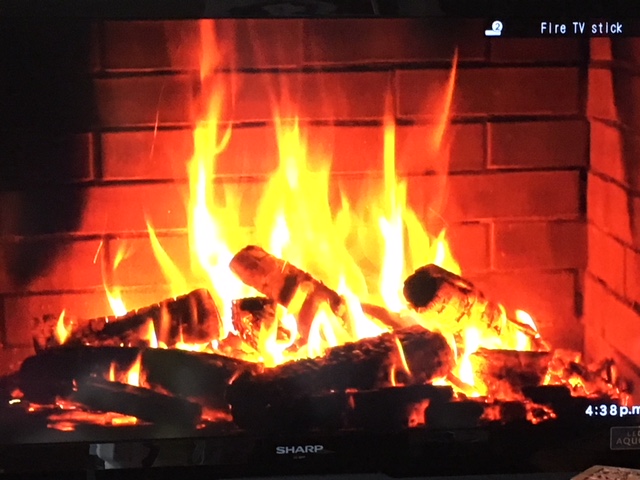
A cold and rainy — turned to snowy — day in Tokyo. Not a very good day to be out and about on foot. A late season snowstorm. Granted, it is too warm for any accumulation, but it is a nasty mess to walk around in. We did go out to the gym around the corner for a workout on the bike and treadmill, and we walked to the ramen shop near the station for a hot bowl of noodles for lunch, and a stop at the supermarket on the way home. But… I think that will be the extent of our adventures today. Makes me want to ask for a “holiday do-over!” Oh well… the weekend is coming, and the weather is supposed to dry out and warm up a bit. Spring is fickle… everywhere. Guess we will just curl up on the sofa and watch our YouTube fireplace this afternoon.

IMG_2074
I feel warmer already.

Ah, Soup Curry!

Living in Japan, we have come to love the variety of food. Japanese curry is very popular, and one of our favorites. This week, we made our first trip to Sapporo, on the island of Hokkaido. And we’ve discovered — soup curry!

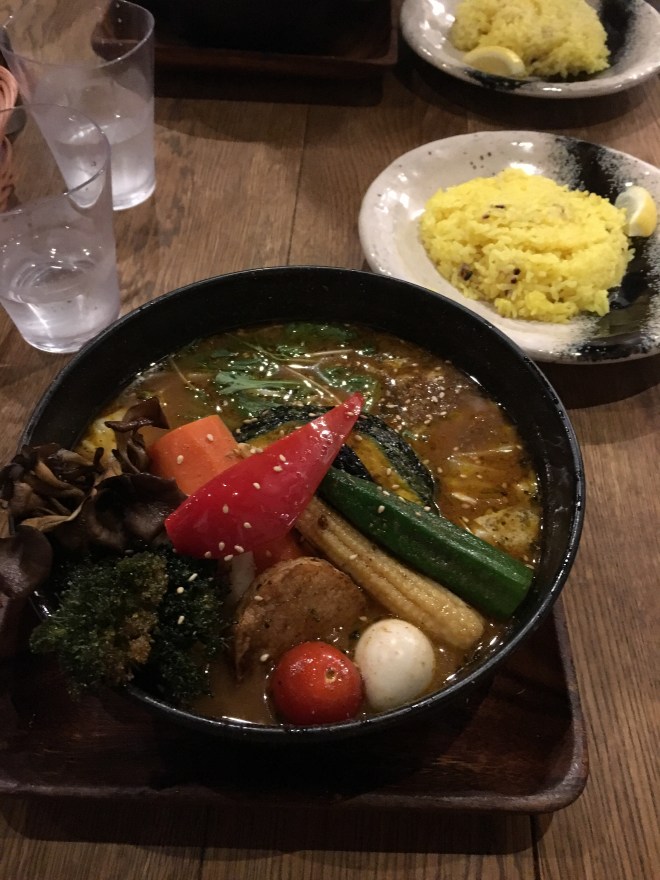
Soup curry originated in Hokkaido, and it’s a favorite here. Many restaurants compete to serve the best version. Basically, soup curry is a much thinner broth than other Japanese curry. It comes with vegetables, rice, and various other options like chicken or pork.

IMG_2042

Ordering soup curry is a multi-step process. First, choose the soup. Then the specific dish — tonight, I had a seven-mushrooms soup curry, and my wife had a vegetable variety. Then choose the spice level — mild to mouth-meltingly hot. In the restaurant we visited tonight, there were six levels of spice. I had level 3, and it was as spicy as I would want to tackle. You also select the amount of rice you want, and other optional toppings.

The place we went tonight was called Garaku – it happened to be close to our hotel, and easy to walk to on a cold and rainy night. There was a line at the door, and we waited about 10 minutes for a table. It was worth it!

The place is a very trendy cafe, with old signs and art on the walls, and ’70s and ’80s American rock ‘n roll music. The servers were fast and cordial, and the menu bilingual, so easy to navigate. Our food came quickly, and it was really good. All in all, a great evening out. Oh, and the price? The total for two dinners was just over 2,100 JPY — a little under $20.

If you have an opportunity to visit Hokkaido, we strongly recommend a stop at a soup curry restaurant. You won’t be disappointed!

Hachiko.

20160718_145044
The bronze statue dedicated to Hachiko — outside of Shibuya Station

We are headed into spring in Tokyo, and as the weather turns warm and sunny, we are watching the buds on the sakura (cherry) trees swell toward blooming. Saturday was sunny and pleasant, and we walked from our apartment in Shibaura to Aoyama Cemetery — about 7 kilometers away. Aoyama is a large cemetery in central Tokyo, and is well known for its beautiful sakura trees in early spring. It is also known as the burial place for Hachiko, the faithful Akita who lived in Tokyo 1923-1935.

Hachiko was the pet of Hidesaburo Ueno — a professor at Tokyo University. Every evening Hachiko would go to nearby Shibuya Station to greet his master when he came home from the university. Hachiko would always appear just before the time Professor Ueno’s train was due, and wait patiently for him outside the station. Then they would walk home together. This routine went on for several years, until the day when the professor did not show up. Professor Ueno had died suddenly of a stroke while he was at work.

Nevertheless, Hachiko continued to go to the train station every day to wait for his master’s train. For over nine years he would show up as always, in hopes that his beloved master would come back to him. After newspaper articles were written about him, many people started bringing him food and treats, and he became a national symbol for loyalty and faithfulness.

In 1934, Hachiko was present when a bronze statue was erected in his honor outside Shibuya Station. Although this original statue was recycled for the war effort, a new statue was placed in 1948, and still stands outside the Hachiko Guchi (gate) at Shibuya Station. In March 1935, Hachiko’s body was found on a sidewalk in Shibuya. It was determined that he had died of cancer and a parasitic disease at the age of 11. He was a faithful and loyal pet to his last days.

IMG_1644
Hachiko’s grave next to Professor Ueno’s grave.


Hachiko’s remains were cremated, and buried next to his master’s grave in Aoyama Cemetary, and the site has become popular with visitors. His fur was stuffed and mounted and his replica is on display at the National Science Museum of Japan, in Ueno, Tokyo. In the above left photo, the first kanji means loyal, and the second is dog. The next characters say “Hachiko.”

Stories and documentaries have been made about the life and loyalty of Hachiko, and there is even an “Americanized” and “modernized” movie version of his story. “Hachi — A Dog’s Tale” starring Richard Gere, was released in 2009 and takes the story to a fictional town in New England. Last I looked, it was still available to watch on Netflix.

Hachiko the faithful dog, lives on in the hearts and minds of the Japanese people.

IMG_0210
Many people come to visit the Hachiko statue outside of Shibuya Station. Some even bring their own beloved dogs for a photo!(Photo taken during the New Year’s holidays, January 2017)

Rain.

20160527_080344

We love living here in Tokyo. It has been an amazing adventure these past 2+ years. We like our apartment. It is small, but comfortable and convenient. We like the ease of public transportation here. We can travel almost anyway in the city — or the country, for that matter — on trains and buses. We get along quite well here without having a car.

But… sometimes… I really miss my car.

It has been pretty rainy here this week. You know — it is almost spring and rain is to be expected this time of year. I like rain. I like rainy days — most of the time. And here, everyone takes rainy days in stride. Everyone has an umbrella. Most people have raincoats and boots. I don’t mind donning my rain gear and going out in the rain — usually.

But this week, I would really like to have my nice dry garage, where I could climb into my nice, dry car, and just go where I need to go without thinking about… rain.

Like I said, I usually don’t mind getting out in the rain, but today — our third rainy day this week — I just don’t feel like getting out in the rain to walk to the supermarket to get today’s necessary groceries. It is about a kilometer to the nearest supermarket. It is a little more than a kilometer to get to the nearest train station. So even with the wonderful transit system here, there is still a good bit of walking involved. I normally enjoy the walking and the exercise it provides. But today… not so much. Juggling grocery bags and my umbrella doesn’t sound very appealing to me right now.

It’s ok… I am just letting the weather get the best of me today. But I will go out anyway… lol.

The forecast says we have a sunny weekend on the way.


Almost Spring.

We have been traveling quite a bit the past few weeks — first to Abu Dhabi, UAE, and last week to Saint Petersburg, Russia. I am fortunate to be able to accompany my husband sometimes when he travels on business. But while we were away this last week, early spring seems to have arrived in Tokyo.

Winters in Tokyo are relatively mild — actually pretty similar to Atlanta. There is little snow, and temperatures rarely stay below freezing for very long. Now with a few warm and sunny days, there is evidence that spring is on the way. Trees and plants are starting to leaf out and bloom. Soon the beautiful Sakura trees will be in bloom, and there will be Hanami (flower viewing) parties under the trees in all the parks. Cherry blossoms will be followed by azaleas, wisteria, hydrangeas, and lotus flowers. It seems like every month here is associated with the blooming of some flower or tree.

The “winter time” ducks have suddenly started to leave to go wherever they go during the warm months. All I saw as I was out for my run this morning were the Spotbill ducks — which stay here and raise their young on the canals during the summer — some Eurasian Coots, and a few straggling Pochards. All the other species were gone! I always miss the winter ducks when they leave… there is such a variety. They won’t be back again until late fall.

The mild and beautiful spring never lasts long enough though. It won’t be long before it will be hot and humid summertime here again. The word in Japanese is “mushi atsui” — humid… totemo mushi atsui… miserable, sticky, heat of summer. Enjoy the spring while you can.