My husband and I were both born and raised in Kansas, but for the past 20+ years we have been living in Atlanta, Georgia. Now, with our children grown and out of the house, we have the opportunity to spend two years living in Tokyo. My husband will be working with the Japanese counterpart to his American company. UPDATE 2023... After 4-1/2 years in Tokyo, we returned to Atlanta. Now we are heading to London for a three year job assignment!
No, we aren’t really going to adopt children, or even pets, in Japan. But we are adopting … or rather collecting… Kokeshi dolls. We started when we saw one at a festival, and decided to buy it. After that, it has started to become sort of an obsession.
Kokeshi dolls are wooden figures, many of them decades old. They were originally produced by onsen public baths as souvenirs in the Tohoku region in Japan. They have unique sizes, shapes and each one has a different face. Different locations have different kinds of faces. It’s fascinating to see these, and they are plentiful at flea markets.
There are may kinds of things that people can buy as souvenirs of Japan. For us we will have some Kokeshi dolls as a remembrance of our time in Japan.
Three times a month I go to my husband’s company for a Japanese class and luncheon with the other expat spouses. We have about a 90 minute language class, followed by a bento — Japanese box lunch — and some type of cultural lesson while we eat.
Japanese bento are amazing. If you are unfamiliar with the term, just Google “bento” and look at all the images that pop up. This is the bento box that I had today:
As bento boxes go, this one is pretty simple. A ground beef patty served on salad, with a vegetable sauce, rice, a couple of slices of cooked potato, a single-bite scoop of potato salad, steamed Japanese pumpkin, and Japanese pickled vegetables. Seems like a lot, but the portion sizes are very reasonable. Colorful, and very tasty! Also… napkin, chopsticks and wet wipe (and toothpick!) are included in the box.
Bento is the term used here for a boxed lunch, but calling it a “lunch box” is almost an injustice. Bento — in Japanese culture — has almost been elevated to an art form. Sure, you can find very simple bento boxes, and strictly speaking, any boxed lunch is considered a bento here. But, a true bento not only nourishes the body with the foods it contains, it also nourishes the eye and the soul with its beauty. Brightly colored foods, artfully arranged — aesthetically pleasing to the eye. Color, variety, and contrasting flavors are key to a good bento. That may sound silly, but here in Japan, lunchtime is considered to be an important time to recharge the body, mind, and soul. Wolfing down a burger and soda in the car as you run errands is just not the same.
Bento boxes can be purchased everywhere here. Meal choices of all kinds can be found in any convenience store or supermarket in disposable or recyclable containers. At lunchtime there are lunch carts that park on the sidewalks in front of office buildings with many choices for hungry workers — usually for 400¥ to 800¥ each (roughly $4 to $8. Restaurants usually set up tables outside to sell bento boxes from their lunch menus. All the department stores here in Tokyo have food sections (usually on the basement level) to sell all manner of lunch foods and bento boxes. There are specialty stores that sell only bento. They even sell bento boxes in train and bus stations for passengers to take with them as they travel. Office workers may take their bento boxes back to eat at their desk, but many people here opt to sit outside in the parks or — here in Shibaura — on benches along the canals.
Stores also sell fancy re-usable lunch boxes for lunches brought from home, and there are all manner of gadgets available to carve and shape foods into fancy shapes. Kids’ lunches often follow a theme with a cartoon character or favorite animal. Moms (and dads too, I am sure) spend much time, energy, and creativity to fashion a fun, delicious, AND nutritious lunch for their children. There are YouTube videos and Pinterest pages galore on how to make cute bento boxes.
Sure… it is only lunch, after all… But why not make it something special. Aren’t we worth the effort?
Walking back from the supermarket today, I took photos of some of the signs I saw. Everywhere I look there are street signs, signs on businesses and buildings, advertisements, notices, and announcements… All written in Japanese.
We have been learning and studying Japanese since we arrived in Tokyo 20 months ago, but still… we are baffled by most of the signs we see, unable to read the characters well enough to understand the message. Pictures help, but a lot of the signs have no pictures. We have learned the katakana, the hiragana, and really… quite a few kanji, but with more than 2000 commonly used kanji (and about 8000 total kanji), it will be awhile before we can read it effectively. And in written Japanese, they mix all three character systems, so it becomes even more of a challenge for us. We try to read the kana, and then there are kanji characters mixed in. Lol… frustrating. Here are some examples:
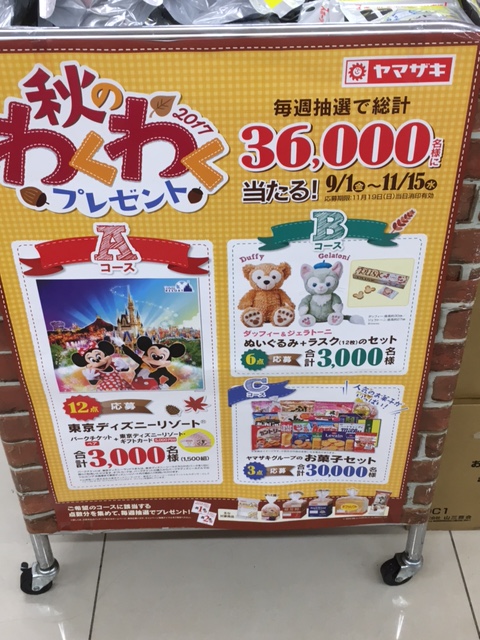
A sign from the supermarket. I can only guess what it means from the pictures. As you can see, they do use regular numbers a lot of the time, but there can also be numbers written in kanji.I walk by this sign everyday… A business. I can read some of the kanji. The red kanji characters say “Shibaura” which is where we live in Tokyo. The big kanji characters may say “Migiyama.”
As text is in English, Japanese characters can be highly stylized — essentially with different “fonts.” We often use Google Translate to help decipher text here, but the more stylized it is, the less likely that Google Translate can read it. Pretty hit and miss, actually…
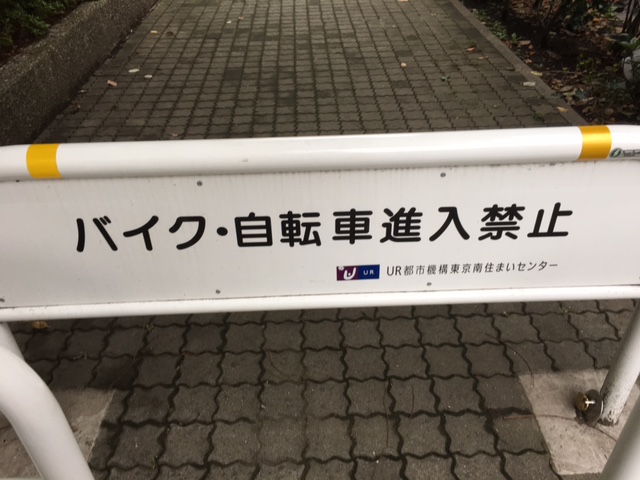
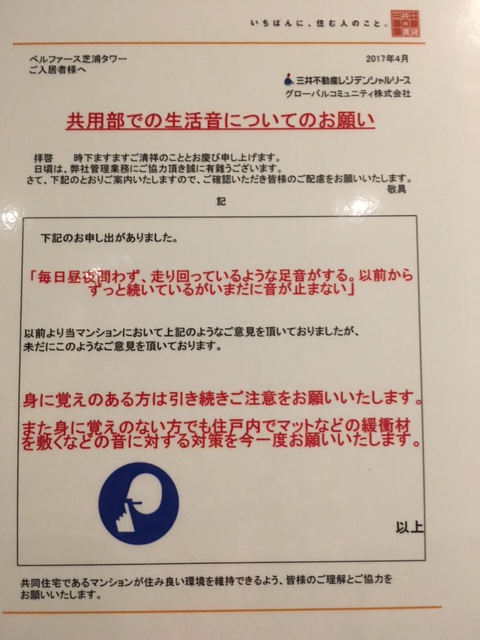
Along the sidewalk near our apartment. the first three characters are katakana: “ba-i-ku” (bike), followed by the three kanji for jitensha (bicycle.) The last four kanji, according to Google Translate, say “no entry.” Yeah… I figured that is what it meant.This is a notice posted at our apartment building… Yes I probably know a few of the kanji, but not enough to read it. My only clue here is the graphic. “Please be considerate of your neighbors, and be quiet!” Lol…
Just a couple more… These are both posted in the elevators at our building, and I know that they have something to do with elevator safety during an earthquake or fire disaster. In the second sign, the first two red kanji represent “fire,” and the second two, are for “earthquake.” This one says not to use the elevator to evacuate during a fire or earthquake. Ok… that makes sense.
Despite the fact that we are still pretty much “Japanese illiterates”, we get along here just fine. We want to continue learning this language, and certainly we wish we could read and understand Japanese better, but we are doing alright without the language proficiency. So, if you ever have the chance to visit Japan… don’t let the language stop you! It is an amazing place.
Lower humidity and a nice breeze enticed me out the door to take a walk around Tokyo this afternoon. I started with a circuit of Shibaura Island, and then continued north to Hamamatsucho Station/Tokyo World Trade Center. I then turned west toward Shiba Park and Tokyo Tower. Zojo-ji Buddhist Temple is at Shiba Park, almost at the base of the tower.
I like Zojo-ji. It is the closest major temple to where we live on Shibaura. [However, right now it is undergoing restoration so most of the temple buildings are covered.] One of my favorite things about Zojo-ji Temple, though, is the Jizo garden at the perimeter of the temple grounds. Under the huge old trees, the Jizo garden is shady and quiet… a peaceful respite from the busy surrounding city.
Jizo — or OJizosama — is a popular Buddhist deity known as the protector of travelers, women, and — most especially — children. You see these little statues placed at many of the shrines here in Japan. Jomyo-in Temple near Yanaka Cemetary in Tokyo, is said to have over 84,000 of them all lined up row, upon row, upon row. The thing I like best about Zojo-ji’s Jizo garden, is that they are all so nicely dressed in their little red hats, bibs, and capes, and all have colorful pinwheels spinning in the breeze.
There are many reasons that these little stone statues are placed at shrines and temples. Since they are known as the protectors of children, sometimes pregnant women place a statue to pray for the health and safety of their unborn child. Also, families who have lost a child, either through stillbirth or death, will place a statue to commemorate their loss and to pray for safety of the child in the afterlife. Jizo often wears a red robe under which it is said he shelters and hides the children, safely shepherding their souls to heaven.
Most of the Jizo statues wear little handmade caps and bibs, or capes or robes… usually bright red. Many of the temples (Zojo-ji is one of them) sell the red caps and bibs. The red color symbolizing protection and safety. But some of the statues wear other colorful outfits. Often there are flowers and small toys, candy or fruit left for the children.
It is a very moving and poignant sight to see… but today all the pinwheels were spinning happily in the breeze.
August in Tokyo. Hot, hazy days with high humidity, and the air so thick with moisture that you feel like you need gills to breathe. Even though we are on the downside of summer with less than a month left before the autumnal equinox, it is still sweltering-ly hot. The temperatures have really not been that high, I guess — usually in the high 80’s/low 90’s during the day — but when combined with the humidity, the afternoon heat index is usually between 105 and 110. We all feel wilted and soggy with sweat. Most office buildings and apartments buildings don’t air condition hallways, lobbies and elevators, and my husband’s office only has the AC on between 8 am and 6 pm. Woe to anyone going in early or staying late!
As darkness comes, the lantern patterns emerge
Lots of great food along the beach
Despite the uncomfortable heat, summer in Tokyo is full of activity. There are matsuri (festivals) almost every weekend, and many include nighttime fireworks displays. There are beer gardens set up in many of the parks, and street food vendors abound. August is vacation time for the local schools, so children are out and about, playing in the parks, riding bicycles, and running along the sidewalks.
In Akibahara, in front of the Owl Cafe
I think I have mentioned before about how “sun-conscious” the Japanese are… even in this heat, many women wear long sleeves and long skirts or pants. Most wear hats to shield their faces, and often long finger-less gloves to protect their hands and arms from the sun. Umbrellas become more valuable providing shade than they are to keep the sparse rain off. I find that I think more about sun exposure now too. I wear more sunscreen here, and cover up more. The sun seems so intense here.
I have been staying inside a lot more than usual. Aside from my almost daily trip to the supermarket, I have stayed pretty close to home. It is just too hot to be out for very long. From my vantage point up here on the 30th floor of our apartment building, I notice that there are fewer people out walking during the day. Seems to be mostly people going to and from work. Early mornings and evenings see more pedestrian traffic, but the sidewalks are much less crowded during the middle of the day.
However, I can tell that the days are getting shorter — at summer solstice in June, the sun comes up in Tokyo at around 4:30 am, and now in late August, it doesn’t rise until after 5 am. And now — Japan does not have daylight savings time — the sun sets just after 6 pm.
Still, the heat is with us… at least for a few more weeks. We still try to get out on the weekends… sometimes just a walk along the canals to see the ducks, or to one of the parks. Here are some summertime photos from Tokyo…
Pretty summertime flowers
At Hibiya Koen — a park near the Imperial Palace
Spot-bill ducks and babies — and a Japanese Wagtail — along the canals
A Large Brown Cicada. The air is full of the reverberating “wee-oh, wee-oh” call of cicadasA cormorant fishing in the canal
One of the things we brought to Japan from the US that we’ve really enjoyed is a small hydroponic garden
.
But recently the LEDs that provide light for the garden stopped working. What to do?
A call to the manufacturer was no help. “Out of warranty, your tough luck” was pretty much their reply. Of course we could always buy a new one and have it shipped from the US. Meh.
Next stop was a search on YouTube to see if anyone else had this problem. Sure enough, we found someone who had the same garden, and the same problem. Seems they determined that 3 capacitors on the circuit board had blown. And they provided some handy instructions on how to fix the problem.
After a quick disassembly we found the circuit board. Should be an easy thing to take the board to Akibahara – Tokyo’s electric town – and get a repair.
Well, sort of easy. Finding the right shop amid the hundreds of electronics places turned out to be challenging, especially with our limited Japanese language skills. “Kondensa okikaeru” got us some blank stares, but eventually we found someone who knew what capacitors we needed. Unfortunately, “can you install” — anata wa insutoru dekimasu ka –didn’t lead to any results.
So, capacitors in hand, we returned home and proceeded to un-solder the old capacitors and install the new ones. Not being terribly proficient with a soldering iron, this had its challenges.
Disassembling circuit board from LED panel
Take off the heat shield
The offending capacitors
New parts from Akibahara
New parts installed
Old ones ready for the scrap heap
But a few solder connections later, we were ready to try out our newly repaired – we hoped – LED panel. Plug in the cord … step back to arm’s length, just in case something blows up.. and YES!… the panel lighted up just as it’s supposed to!
So we’ll keep an eye on our light panel for a few days, just to be sure everything is working right. But for now at least, a small victory in our life in Japan.
So many things I appreciate about Japan. Last Saturday, I stopped at the ATM. Here in Japan, ATMs offer more than just a place to withdraw cash. One service is, when you insert your bankbook, it updates all the transactions.
Except, last weekend the machine told me that my bankbook was out of pages. What to do? Well, next time at the office I asked a co-worker. She said the ATM would generate a new bank book. So, another trip to the ATM. Insert my bankbook. Fortunately, there are English menu options, since my ability to read kanji is still very limited. Sure enough, one of the menu items is “new bankbook.” Pushed the button, and the machine starts making computer noises, with a screen that says this may take a few minutes. A few minutes later, viola – a new bankbook pops out, followed shortly by the old book. Gotta love it.
And then there’s sushi. We have a favorite sushi place near Tamachi station. Nothing fancy. There’s a conveyor belt sushi-go-round, and also sushi chefs who will fill orders upon request. There’s an English menu, but the Japanese menu is more complete, and by now, we know enough to read some of the Japanese menu. And… we’ve even learned how to place orders in our infantile Japanese. The sushi chefs are very patient, and most of the time we can communicate well enough to get what we want. It’s always good, and pretty reasonably priced.
Of course, there are many other things we like about Japan. We’re already thinking about what we’ll miss when my assignment ends in a year and a half. In the meantime, we plan to enjoy all the things this culture has to offer. It’s a great experience.
We are back from our trip “home” to Atlanta. I had a nice visit with our family, and my husband finished his business trip, plus had a few days to see our children as well. We took care of a few “homeowner chores” on our house in ATL, and we got to visit restaurants we miss, and do some shopping, etc. It was a pretty pleasant 16 days… aside from JET LAG.
Let’s face it… jet lag sucks. If you have ever traveled by air and crossed multiple time zones, you know this. Jet lag messes with your body. It upsets your sleep, your appetite, and your digestion. It gives you “foggy brain” during the day, and makes you sleepless at night. And the more time zones you cross, the worse it is… and the longer it lasts.
In the past year and a half, we have done a lot of air travel. So far in 2017 alone, I have already had 10 flights of 10 hours or more. The direct flight to ATL from Tokyo is about 13 hours — a little longer on the east to west leg, and a little shorter on the west to east leg. From this, some observations:
In general, jet lag from west to east travel is worse than east to west travel. I know there is an explanation, and it involves circadian rhythms, but I don’t exactly understand it. All I know, is that I can leave Tokyo, fly 13 hours, cross 13 time zones, and arrive in Atlanta at the same “time” that I left Tokyo. lol… I become a time traveler. Then it takes me a week to feel normal and sleep normally again. When we fly from ATL to Tokyo, we “lose a day” and arrive about 26 hours after the time we left Atlanta. (13 hour flight plus 13 time zones equals 26 hours later.)
Either way we fly, that 13 hour time difference pretty much turns our days and nights upside down. We find ourselves getting sleepy/groggy at lunch time (roughly midnight in the other location), reviving a bit in the evening, and then waking — almost invariably — at around 3 or 4 in the morning. Sometimes we manage to go back to sleep at 5-ish, but sometimes not. Today, for example (our second day back), I woke at 3:15 am Tokyo time, and never could go back to sleep. We finally gave up and got out of bed at 5:45 am — even though this is a holiday (Mountain Day in Japan) and my husband didn’t have to go to work.
Under the influence of jet lag, my appetite is wacky. I get hungry at odd times, and don’t feel hungry at normal meal times. My digestive tract becomes confused and sluggish (we will leave it at that…) and my mind becomes somewhat muddled. I sometimes lose my train of thought, and find myself staring out of windows… a lot. lol.
It all gets better with time… slowly. Day by day, my sleep becomes gradually more normal, and everything starts to adjust to the new time zone again. It is unpleasant, though, for those first few days. I guess it is just the price we have to pay for living in a foreign country, so far from “home.”
Off we go again. Tomorrow we leave Tokyo for yet another trip. But this one is to the US. For my husband, it is a business trip. He will be working for one week from his office in ATL, then the second week, he will be somewhere in Pennsylvania. For me, it will be two weeks at “our home” near Atlanta, visiting with our family.
Technically, it is still “our home”… We own it, and it still contains most of our belongings. But… right now it just doesn’t feel like home. While we have been living in Tokyo (for a year and a half now) our daughter and her new husband have been living in our house. They have become our renters and caretakers. And… they have made it “their home.” They have changed some things, and they do some things differently than we did when we were there. That is ok… I certainly understand. It just feels weird to me.
We were really happy when our daughter moved back to Atlanta and agreed to this arrangement. It made things so much simpler for us… not having to move out of the house and lease it to strangers, but it isn’t without drawbacks. It is nice to have family in the house, and it is nice to have a place to stay when we do come back for the occasional holiday and visit. And it is still our family home where we can all gather to spend time together.
That said, it just feels awkward when we go back to “our home,” but it really isn’t our home. My kitchen is no longer “my kitchen.” The master bedroom and suite have been taken over by my daughter and son-in-law. Our things are still there: our furniture, knick-knacks, clothes, and other possessions… but it just doesn’t feel right. And… I will admit it… it does make me feel just a bit stressed.
I have spoken to other spouses in my husband’s company, who are temporarily living the expat life somewhere, and they say the same things. “Home” just doesn’t feel like “home” right now.
We are about halfway through our time in Tokyo. We are enjoying it so much, and we will be sad to leave Tokyo. We have made that tiny apartment “our home” for now. And I know, when the time comes to return to the US after this assignment, we will make that home in Atlanta into “OUR home” again.
The LDK (living,dining,kitchen) of our Tokyo apartment — Our home for now.
Today was Marine Day in Japan. One of the more recently-established national holidays, it was established to give thanks to the ocean’s bounty and to consider the importance of the ocean to Japan.
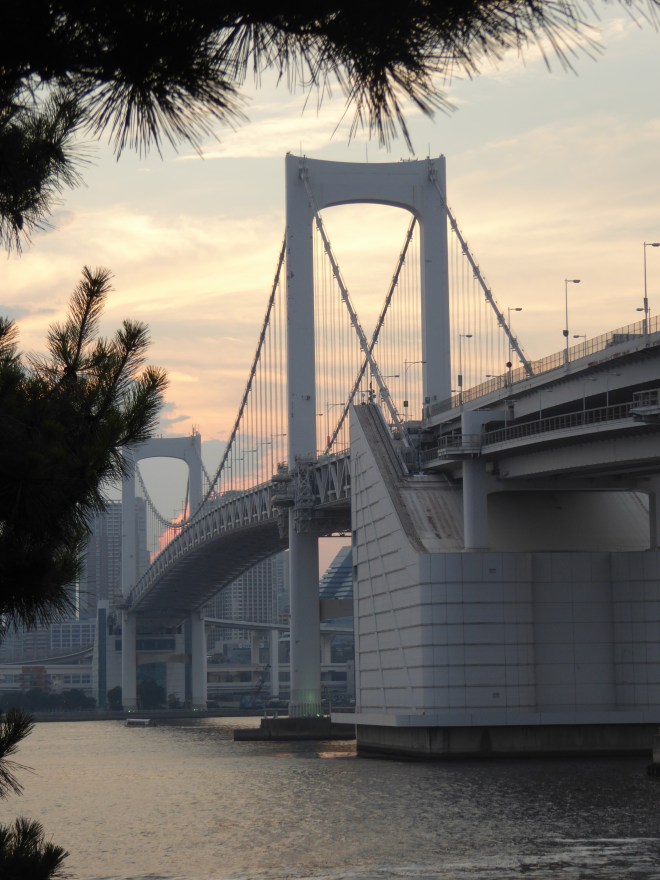
One of the celebrations is the Lantern Festival – Umi no Hi – on Odaiba Island. We walked across the rainbow bridge — about 2.5 km — from our apartment on Shibaura Island.
Rainbow Bridge
On a hot summer day, the walk across the bridge is a pleasant one. The walkway is relatively shaded, and there is a nice breeze. There are some observation areas that allow some scenic views of Tokyo Bay and the surrounding area.
Odaiba is an interesting place. There are some battery islands that were built in the late 1800s as Japan was preparing a defense against Commodore Perry’s “black ships.” One of the battery islands is accessible by a land bridge, and makes a pleasant place to walk.
Tour boat going past a battery island
Canon mount from days gone by
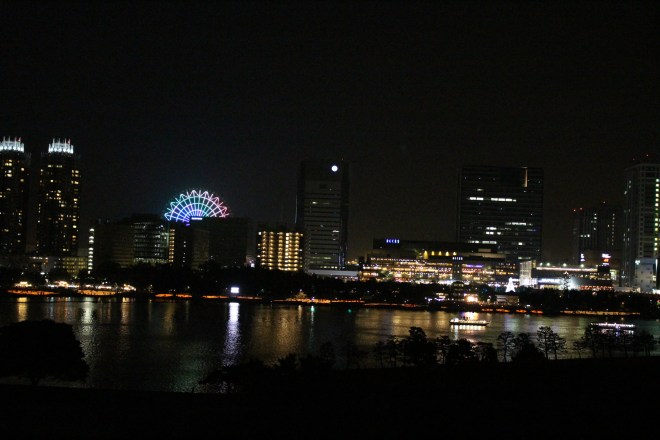
On Marine Day, thousands of lanterns are arranged on the Odaiba beach, then lit to make geometric shapes as the twilight fades to darkness. Of course, there are many street vendors that sell nikuyaki, okonomiyaki, takoyaki, grilled oysters, beer and other delectables.
Thousands of lanterns are arranged on the beach
Lots of great food along the beach
As darkness comes, the lantern patterns emerge
Rainbow bridge is open until 20:30, so it’s easy to walk back from the festival. Or, for those who want to stay longer and enjoy the festivities, trains are available from the Tokyo Teleport Station (a subway that goes under the bay), and Odaiba-Kaihinkoen Station (a train that crosses the Rainbow Bridge). Tonight, we opted for the walk back across the bridge. It was a warm summer night, and the view was outstanding.

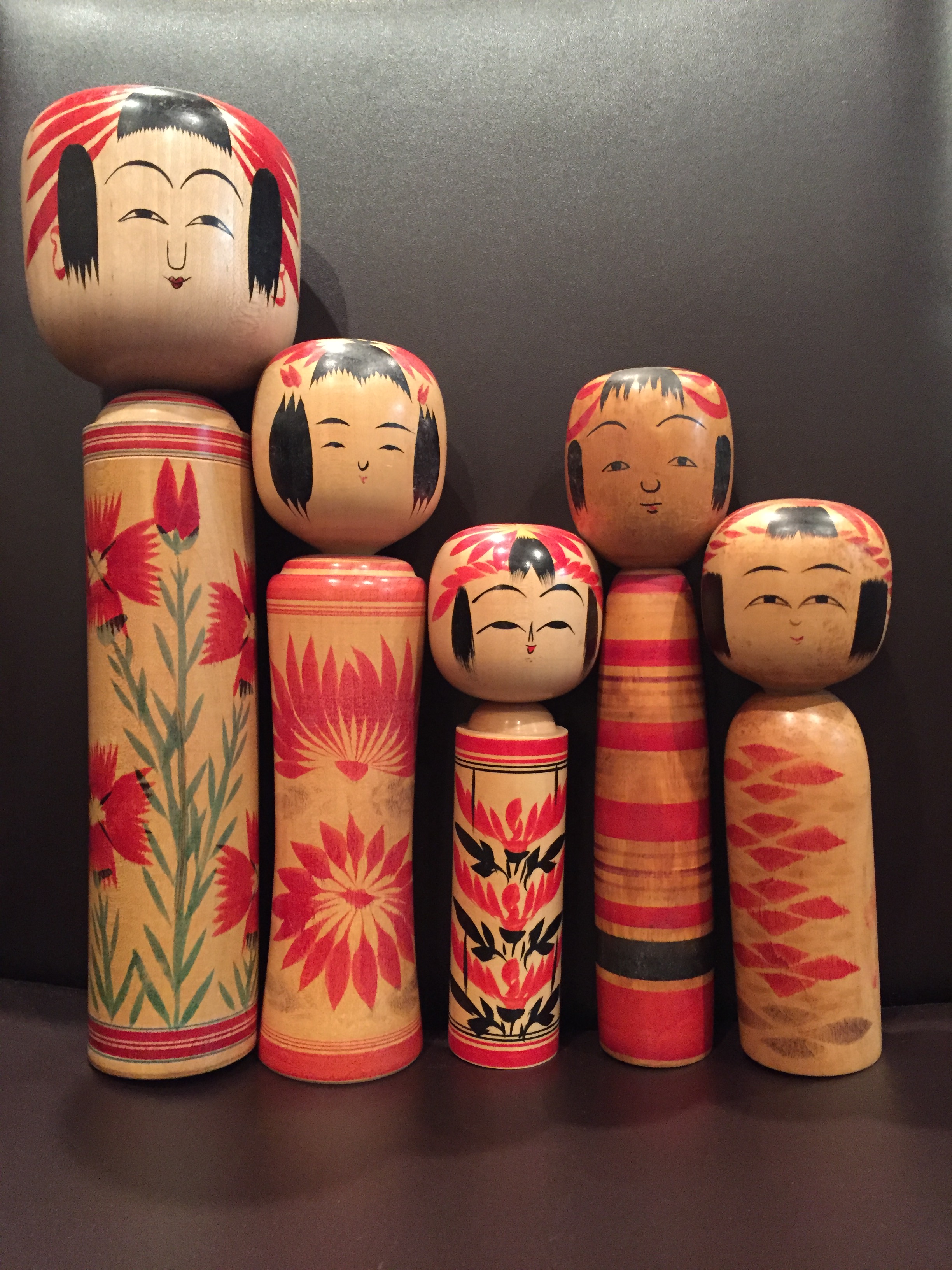 Kokeshi dolls are wooden figures, many of them decades old. They were originally produced by onsen public baths as souvenirs in the Tohoku region in Japan. They have unique sizes, shapes and each one has a different face. Different locations have different kinds of faces. It’s fascinating to see these, and they are plentiful at flea markets.





![IMG_3020[1]](https://atlanta2tokyo.com/wp-content/uploads/2017/08/img_30201.jpg?w=660) Except, last weekend the machine told me that my bankbook was out of pages. What to do? Well, next time at the office I asked a co-worker. She said the ATM would generate a new bank book. So, another trip to the ATM. Insert my bankbook. Fortunately, there are English menu options, since my ability to read kanji is still very limited. Sure enough, one of the menu items is “new bankbook.” Pushed the button, and the machine starts making computer noises, with a screen that says this may take a few minutes. A few minutes later, viola – a new bankbook pops out, followed shortly by the old book. Gotta love it.
Except, last weekend the machine told me that my bankbook was out of pages. What to do? Well, next time at the office I asked a co-worker. She said the ATM would generate a new bank book. So, another trip to the ATM. Insert my bankbook. Fortunately, there are English menu options, since my ability to read kanji is still very limited. Sure enough, one of the menu items is “new bankbook.” Pushed the button, and the machine starts making computer noises, with a screen that says this may take a few minutes. A few minutes later, viola – a new bankbook pops out, followed shortly by the old book. Gotta love it.




 Four Years in Japan ... and now Three Years in London