“But… what do you DO all day?”

Ok… I was all set to do a blog about Summer in Tokyo, but I will push that aside for a bit and address the above question. I have to admit that this question disturbs me a little. Probably because when someone asks me this question (and it seems to be coming up more and more often the longer we live here), I never feel like I give a very good answer. I tend to stammer around a bit with it, and start to feel like I am being judged.

Admittedly — my daily “to do” list here in Japan is pretty short. Since I am here on my husband’s work visa, I don’t have a job here. I gave up two jobs in the US when we came here, and I was more than happy to do so for the experience of living in a foreign country. I am a college-educated professional in my own right, but while living here I am a “shufu” — Japanese for “housewife.”

And there is nothing wrong with that! I have my responsibilities around our home — laundry, cooking, cleaning, shopping — and I have many interests and hobbies to occupy my time. I don’t sit around and twiddle my thumbs and lament my boredom. Life is what you make of it, and right now I just have a bit more time to do the things that I want to do.

I am not saying that I don’t sometimes get bored… Don’t we all? No matter how full our calendars get.

So — a typical day… What does a typical day for this expat “shufu” look like?

  •  I get up early. This time of year (early summer) the sun comes up before 4:30 am. And as soon as the light starts coming around the edges of our curtains, I am awake. Even in the winter the sun is up at 6:30. No more sleep for me.
  • At home in the ATL, my husband had to leave so early to beat the traffic, that I never got up when he did. He would get up and pack his lunch, fix his own breakfast, and go to work. So… (lucky him?) I now fix him breakfast and lunch. He leaves for work at about 7:45 or so… much better than 5:30 am back home. He has a ten-minute walk to his office.
  • I clean up the dishes (no dishwasher here), make the bed, and tidy our small living space. Three or four mornings a week (weather permitting — no dryer!) I put in a load of laundry.
  • I check my e-mail, message with my family back home — we are 13 hours ahead, so my morning is their evening — and maybe have a video chat with one or more of them, and maybe with our 4-year-old grandson.
  • I change into work-out clothes. Depending on the weather, I either get ready for a run along the canals, go to the gym around the corner,or just do yoga here in the apartment… Usually an hour, to an hour and a half.
  • I hang out the laundry. All apartment balconies in urban Tokyo are designed for hanging laundry. There is an extra bar to hang hangers on, or to clip towels and linens to. And yes… living on the 30th floor there is often a strong wind. Everything has to be secured. I don’t want to chase my laundry around the neighborhood.
  • Before lunch, I may message with any of my family who are still awake and online, and I do some Japanese studying. We don’t have a formal class right now, so we are working through the Duolingo app in Japanese.
  • After lunch, I usually check to see how the laundry  is drying, then walk to the supermarket for that day’s groceries. I go to the supermarket about 6 days per week. Seems like there is always something I need. I have a very small refrigerator (dorm size, with a small freezer) and very little cupboard space. No stocking up. The walk to the supermarket is about a kilometer, and takes about 10 to 15 minutes. So I am usually back within an hour.
  • Afternoons, I have time to work on hobbies or interests, or to do some more studying. I am determined to be conversant in Japanese someday!
  • My husband is usually home from work at about 6 pm, so I start fixing dinner in late afternoon. It is usually pretty simple since I am a novice at Japanese cooking. I am learning about cooking methods here, and Japanese ingredients. I don’t have an oven, just a cook-top and a small fish broiler — so sometimes it can be a challenge.
  • After dinner we wash the dishes (again… no dishwasher), sometimes do more Japanese study, or veg-out and watch something on Netflix or Amazon Fire. We only have the basic cable to our apartment, so all the TV stations are in Japanese. If we wanted to upgrade our package, there are English channels available, but we don’t really care about doing that.

So… What are the hobbies that I spoke of? I brought several things with me to keep me occupied.

  • I write. I wanted to do a blog about our experiences here. I am a novice at writing, but I like writing. I never thought I would run out of topics to write about here, but sometimes now, it is hard to come up with ideas. Things don’t seem so strange here anymore. This has become “home.”
  • Books. I like to read. I brought “real” books, and I have many more e-books on my Kindle. Right now I am into historical fiction about Asia.
  • Yoga. I taught yoga in the US. Right now I have my own personal yoga practice, and sometimes I do a yoga “class” with my husband in the evenings. I toy with the idea of finding a place to teach here in Tokyo. Maybe.
  • Knitting. Well… sort of. I brought my knitting stuff, but (with all due respect to my ultra-talented sister-in-law, who can knit ANYTHING), I am just not good at it. I try, and I have an interest, but…
  • Drawing. I have a little bit of an artistic streak, but as with the knitting, I have the desire, but not any particular talent. ZenTangles (Google it) are my current interest. I also do a bit of adult coloring. zen2015-05-29
  • Photography. My husband got me my own digital SLR, so on weekends we often go out on photography walks. During the week, I sometimes go out on my own. My current interests are wildlife (mostly ducks on the canals) and water (sky-pools.) On summer weekends there are usually festivals to photograph, or just interesting Japanese temples and shrines, or Japanese gardens and flowers. Thank goodness for digital. We have a bazillion photographs.
  • And of course, walking and exploring this amazing city! I/we walk a lot, and have walked all over this city. Typically on a weekend we will forgo the trains (mostly) and walk 10 to 12 miles each day. So much to see!

Well… that is about it. Like I said, I am somewhat bothered by the question, and especially by the quizzical looks I get when I try to explain what my relatively unstructured days look like. Now, more photos…

A day (or less) in Fukuoka

Recently, my company had meetings in Fukuoka, Japan. Although most of my time was spent in a windowless conference room, I did have about a half day to explore the city. Here are some observations.

IMG_4481
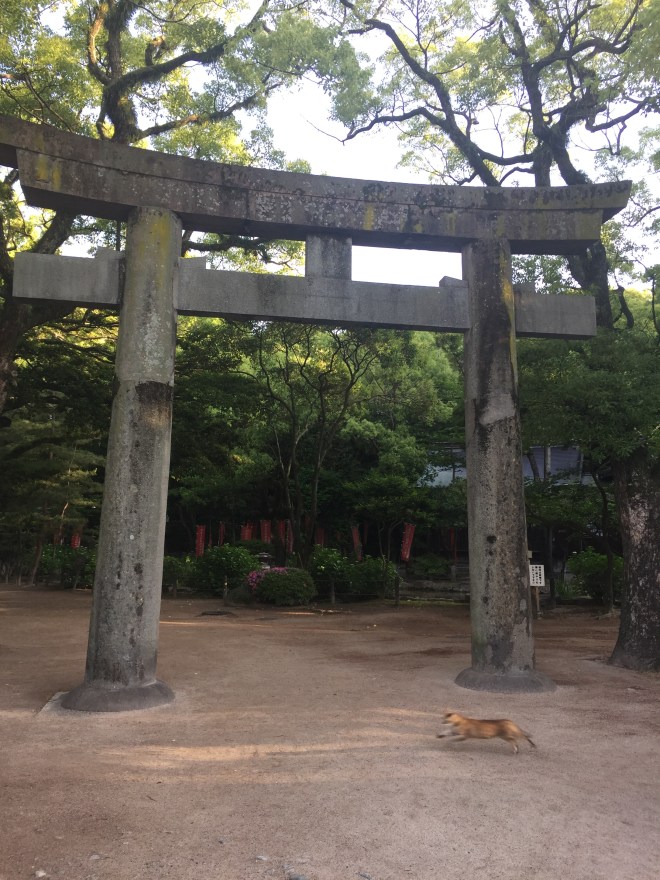
Torii gate at Sumiyoshi Shrine…photobombed by the shrine kitty

First, getting around in Fukuoka is easy. My hotel was in the downtown area. It’s an easy train ride from Fukuoka airport to Hakata Station, or Tenjin Station. These stations are centrally located to many downtown hotels. Although taxis are plentiful, the train is  convenient and easy to use. Nishitetsu is also a major bus company operating in Fukuoka Prefecture. Main bus terminals in Fukuoka city are at Hakata Station, Tenjin Station and at the airport.

I found Fukuoka to be a very walkable city. I started my wanderings by walking from my hotel to Sumiyoshi Shrine. A sign on the grounds explains that the gods enshrined in Sumiyoshi have been worshipped for protecting the nation and sea voyage since ancient times. The main hall was rebuilt in 1623. The grounds are a peaceful and quiet pause in the heart of the busy city.

Next I took a longer walk to Shofukuji Temple. It’s about a 15 minute walk from Hakata Station. Shofukuji was the first Zen temple constructed in Japan, dating back to 1195. Of course, most of the structures have been built and rebuilt over the years. The temple makes for an interesting afternoon, and there are a number of smaller temples in the neighborhood.

Next, I walked a short distance to Tochoji Temple. The head temple of Shingon Buddhism Kyushu sect, it has an impressive five-storied pagoda. For some interesting details about the temple, see the Fukuoka City Guide.

With the day coming to an end, I made one more short walk to Kushida Shrine. Kushida-jinja is a Shinto shrine, believed to have been founded in 757. Today, it is widely known for the Hakata Gion Yamakasa festival. The Shrine grounds include a huge, ancient ginko tree, and Kazari Yamakasa or large stationary festival floats. It’s a great place to spend some time as part of a walking tour of Fukuoka.

Fukuoka is an interesting city, and certainly there are things to do that don’t involve shrines and temples. But if you enjoy walking, and getting a glimpse of Japan’s ancient culture, a half-day in Fukuoka is time well spent.


Travel in Japan — Part 2

IMG_2275

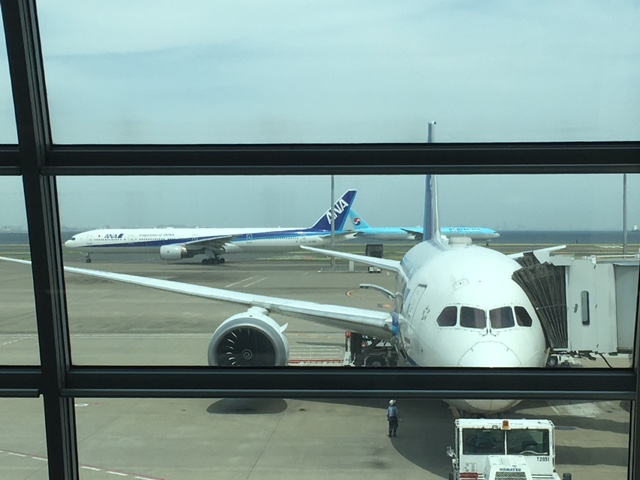
As I said in Part 1 of the Travel in Japan blog, with this job assignment my husband — and I, also — have had a lot of opportunities to travel internationally, and we have gotten used to the process of long distance air travel. But, we have also taken a few domestic flights here inside Japan. What we have found is that there are some interesting differences between domestic travel in Japan, and domestic travel we have experienced in the US.

The biggest difference we have noticed is in the amount of time required to get through the check-in, baggage drop, and security process. Always in the US, we would arrive at the airport at least two hours ahead of our flight. We could never anticipate how long the security lines would be. We could check in online from home, and (because they always charge for checked bags in the US) we would just carry on our bags. But proceeding directly to security, we never knew how crowded it would be. Sometimes we would get TSA-Precheck and the lines were shorter… sometimes not. Sometimes the lines were really long, and sometimes not so long.

Japan seems to have a more efficient system in place. Not that we haven’t had to stand in line for check-in and security, but the lines are usually much shorter and move along quickly. Even with bag check — and there is no additional charge here for checking a bag — it has never taken more than 15 minutes or so to get to our departure gate.

IMG_2273
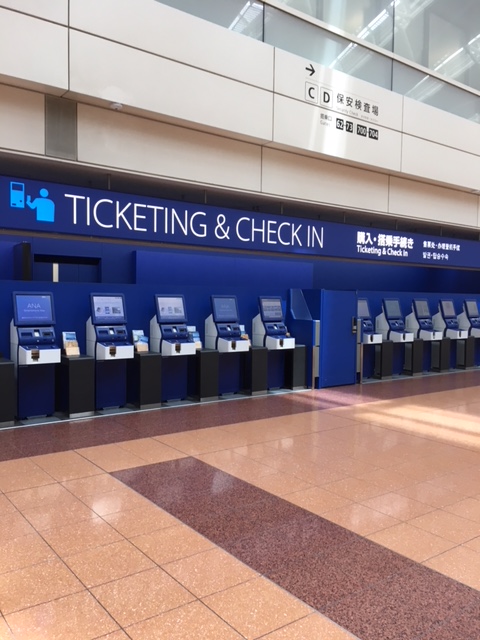
Automatic check-in kiosks, but I checked in online and skipped this step. Looks like most everyone else did too!
IMG_2274
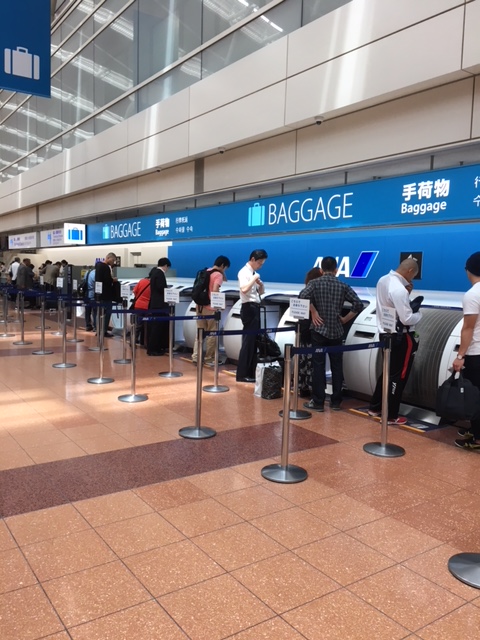
Automatic baggage drop. Easy, and fast, and English instructions. There was also an attendant available if needed.

With our most recent experience on ANA, we booked flights online — at which time we were not allowed to pick seats. But a few days before the flight, I went online to the ANA site and was able to choose my seat. This activated what they call “Skip” service so that all I had to do was take my ticket receipt with the 3-D bar code and go to an automated baggage drop at the airport. Step by step instructions (English option) and my bag was tagged and automatically checked in. From there, I went straight to security.

There was no line at security the day I flew. Security moved very quickly. Shoes stay on. I took my electronics out and put them in the tray, but I am not sure I even had to do that. I walked straight through the metal detector, and gathered my belongings. The woman ahead of me had a bottle of green tea, and just placed it in the tray with all of her other things.

Other differences I noticed:

I always take my passport when I travel, and my Japanese Residence Card — which is what I am required to carry here. My passport never came out of my bag, and no one ever even asked to see my residence card. All I needed was the receipt with the 3-D barcode.

Boarding was similar to, but faster than boarding in the US. They, of course, board passengers needing special assistance first, followed by premium passengers. After that, they boarded passengers in the back of the plane (rows 29 and above), and then the rest of us queued up behind them. Scan that same 3-D barcode, collect the boarding receipt, and it was all done.

On the plane, drink service was simple and fast. It was only a 2 hour flight, so the choices were tea or juice, nothing else. No snacks. If you want food, you bring it on board with you. This keeps the flight attendants from having to take multiple trips up and down the aisles with those big service carts.

We have only had the opportunity to fly JAL and ANA which are the major two airlines here. I know that there are other “no-frills” airlines that do charge extra for every service you want… sort of an “ala carte” way to fly… but we have found that JAL and ANA both have fairly competitive prices, and we are very satisfied with their services.

Even though the flights we have taken in Japan have all been 2 hours or less, they tend to use the larger aircraft that we usually associate with longer flights and international travel. Eight seats across, on this most recent flight to and from Fukuoka, and the flight was full.

All in all, domestic air travel in Japan has been very easy and pleasant. I really can’t conclude that the Japanese have a better or more efficient system in place for their airlines and airports, but something about it makes a difference. Maybe air travel can still be an enjoyable experience.

Lost… and Found!

You know that feeling you get in the pit of your stomach the instant you realize you’ve done something really stupid?

Yeah. That feeling. I had it last week.

Our train had just left Nagasaki station on the way to Fukuoka. And my wife said those three words — “where’s the camera?”

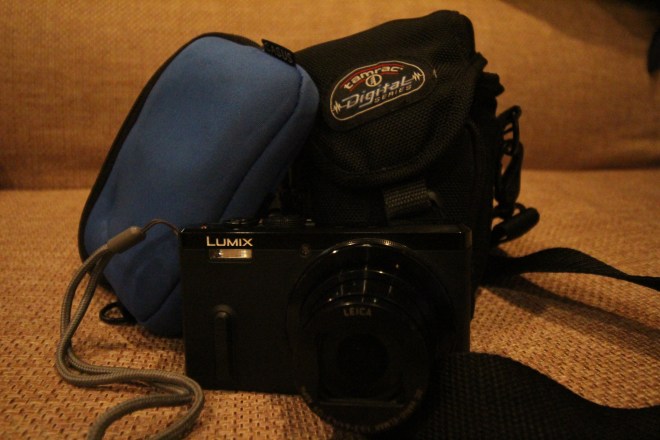
IMG_7013Normally, I’d say, “it’s safely stowed away inside my backpack.” But, earlier that day, I had decided it might be fun to take a few “train window” pictures. So, I slung the small bag with our trusty Lumix point-and-shoot over my shoulder. And suitcase, backpack, convenience store snacks, and camera in hand, we were off to the train station.

But the train tickets were wrong, and we had to make a change at the train station office. Not hard, but it required me to speak some Japanese…and sign a Visa receipt. So I took the camera bag off my shoulder to keep it out of the way. Whether I left it in the train station office, or on the bench at the platform, I don’t recall. But as the train was leaving the station, I realized….I had left our faithful camera behind.

After a frantic and futile search of our seats on the train, I realized it was no use. And spent much of the rest of our train ride berating myself for my carelessness.

Fortunately, my wife was being more productive. When we arrived at Fukuoka, she found a JR train line attendant, and said, “kamera wo nakushimashita” — I lost my camera. He promptly pointed us to … the Lost & Found office.

Entering the office, the smiling lady greeted us in Japanese. “Eigo ga wakarimasu ka” – do you understand English, we said. “Iie,” she said, waving her hands – not so much. Without a pause, my wife countered, “kamera wo nakushimashita. Nagasaki eki ni…” We lost our camera at the Nagasaki train station. Message received… but at first, she thought we were tourists, and we’d have to go back to Nagasaki to get the camera. “Tokyo ni sunde imasu,” my wife quickly said — we live in Tokyo.

Then, all was good. It seems that if you live in Japan, Lost and Found can ship lost items  to you (cost on delivery).  Soon she called Nagasaki station, and started asking about a lost camera. I heard her say something about “ao kaban” — blue bag. Success! I hadn’t mentioned that the camera was in a blue bag, inside a black bag. They found my camera!

We filled out our address on the return form, and between her little English and our little Japanese, we learned the camera would be shipped to us soon.

Sure enough, TWO days later, the camera arrived. The cost for this lesson — 1,339 Japenese yen — about $12 shipping fee.

So, I’ve learned a couple of things from my experience. First, from now on, my little point-and-shoot will be tucked safely away in my backpack when I travel so I don’t carelessly leave it aside. And, second, if you’re going to lose something, do it in Japan. I’ve often heard stories of lost items being returned safely to their owners. I now know from personal experience, it’s true.

Travel in Japan — Part 1.

IMG_2387

Since we have been on this assignment here in Japan, we have had a lot of opportunities for international travel. We have gotten used to the routine of getting ourselves and our luggage to the airport, finding our flight, and managing ground transportation at our destination. Most everywhere we travel from here is at least a 10 to 13 hour flight. Those long hours on a plane are tedious, but we have figured out how to deal with it.

But, in this blog I’ll talk about shorter trips, and the modes of transportation that are available to us here in Tokyo and in Japan. In the US, we had cars that we depended on daily to take us where we needed to go. Here — with no Japanese driver’s license (and the unlikelihood that we will ever get Japanese driver’s licenses, as it is such an arduous and expensive process for Americans) — we have had to explore the other options for transportation:

On foot. Not exactly considered to be transportation, but we use this mode of travel the most. Even with all the other forms of public transportation here, this is the easiest and most convenient for us for shorter distances. We are, after all, just over a kilometer from the closest train/subway stop, so any trip we take always begins and ends with walking on foot. True enough, taxis abound, but should I make that daily trip to the supermarket in a taxi? I think not.
IMG_20180522_091413

Bicycles. Bicycles are a popular mode of transport here, but we don’t have one. Most bicycles here are the very utilitarian style… meant for commuting and transporting packages and/or children. “Mamachari” (mommy chariot) bicycles are very commonly used by young mothers, and I have seen women in dresses and high-heels taking kids to school/daycare on their way to work — a baby in a front-pack, a toddler in the front kid-seat, and an older child in the back kid-seat. These are the “mini vans” for urban Japanese mothers! They are large, heavy, and sometimes have a power assist option with a battery powered motor to help get them started. Most bicycles ride on the sidewalks, so they compete for space with the pedestrian traffic. I have often been sideswiped and nearly flattened by sidewalk bicycle riders. “Sumimasen… Gomenasai!” (Excuse me… I’m sorry!)

mamachari

Taxis. I will be brief here because my husband and I just don’t really take taxis very often, and generally prefer other forms of transport. But, the taxis here are numerous, and fairly reasonable in cost. There are many taxi companies, and you can find a taxi at just about any train station or major street corner. The cars are all very clean and maintained, and the drivers are usually wearing suits and white gloves. The taxi doors open and close automatically, so don’t yank on the door handles. Wait for the driver to open the door for you. And the best part? You pay what the meter says — NO tipping.

Buses. There are many buses in Tokyo, and all over Japan for that matter. City buses, tour buses, and regional “highway buses” traveling between cities. We don’t often take the buses because we prefer traveling by the trains, but buses are a very popular option here. Train/subway routes can take you to a general area within Tokyo, but buses fill in the gaps. Some bus lines have a “per-trip” fare, and some charge by distance. Most will take the same IC rechargeable fare cards — and in fact, most of the buses and trains in Japan will all take the same IC cards, so when we travel to other cities, we can usually use the same cards as here in Tokyo. Cash is also accepted, and some buses have change machines on board.

Trains. There are myriad types of trains in Japan! Here in Tokyo, the two major types are “densha” — above ground electric trains — and “chikatetsu” — below ground subway trains. But, in addition, there are monorail trains (one runs right by our apartment, and connects Haneda Airport with Hamamatsucho train station), the Narita Express to Narita Airport, and other express or limited express trains traveling to suburban Tokyo. Between the cities, are regional trains, and the high-speed “bullet” train, the Shinkansen. All of these trains make travel around Tokyo — and around all of Japan — easy, convenient, and (for the most part) pleasant. The trains are clean, and well-maintained, and run (always) on schedule. It is a very dependable mode of transportation in Japan… with the only possible downside being that at rush hour, they can be very, very crowded. So crowded, in fact, that some of the stations employ white-gloved “pushers” to shove people into the train cars so that the doors can close.
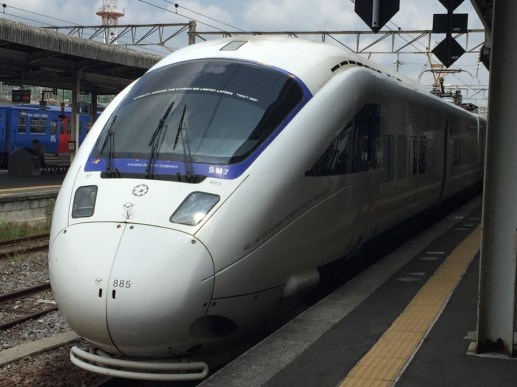
IMG_2410

IMG-4561

Shinkansen. I know that I already mentioned the Shinkansen above, but I feel it deserves a little more attention. It is without a doubt the premier mode of long-distance travel inside Japan. The trains are fast — about 200 mph. The cars are clean and comfortable with plenty of legroom and space for luggage. They don’t go to all locations in Japan, but connect most of the major cities. True, airplanes fly faster, but with the Shinkansen, you don’t have to get to the airport 2 hours ahead of your flight to check-in and go through security. You can, actually, arrive at the station just ahead of your train time… forget security lines! But, don’t dare be late, because you WILL miss your train. They run ON SCHEDULE. Some stops along Shinkansen routes are very brief, so be ready to grab your luggage and get out the door. No dawdling here! Alas… the major downside of the Shinkansen is that it can be pretty pricey. Yes, it is usually cheaper to fly for the longer distances inside Japan.
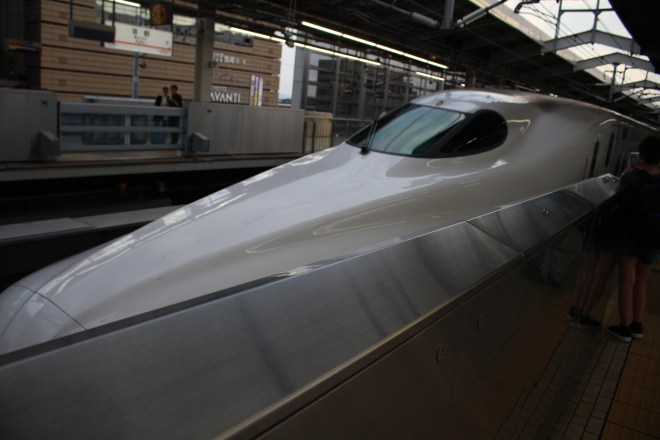
IMG_4513

Air Travel. I will leave this for Part 2 of the blog. There are many differences here between domestic air travel and international air travel. My husband and I just flew to Fukuoka and back, last week, and I will devote the next blog to talking about that trip.

Visiting Nagasaki

Nagasaki is a city rich in history that dates back hundreds of years.  We recently had an opportunity to visit this fascinating Japanese city. Here’s a quick look at this coastal city.

We arrived in Nagasaki via expressway bus from Hakata Bus Terminal in Fukuoka. Bus travel is a good choice in Japan. Buses are clean, convenient, and almost always on time. Buying bus tickets at the station was an easy process, with most signs in English. The friendly staff person spoke a little English, and with our limited Japanese, we purchased tickets with no problem at all. Our bus was a “Super Express” – only one stop between Fukuoka and Nagasaki Station, a trip of about two hours.

Our hotel was the JR Kyushu Hotel Nagasaki, just steps from the bus and train station. As usual in Japan, the hotel staff was friendly, and spoke a little English. Rooms are a little bigger than typical Japanese hotels, and we found it to be a comfortable and convenient place to stay.

Getting around Nagasaki is easy. We bought a day pass for the street car, which at 500 yen provides unlimited use. The street car has routes convenient to many attractions in the city. There are also a multitude of buses and taxis available, which we didn’t find a need for.IMG-4561

There are many things to see in Nagasaki. Of course, there is the Peace Park, atomic bomb hypocenter monument, and the Atomic Bomb Museum. These provide a powerful and sobering view of the human tragedy of the atomic bombing on Aug. 9, 1945. Perhaps if everyone could see this, there would be more willingness to abandon the weapons that can cause this kind of suffering.

Aside from the Peace Park, there are more uplifting things to see and do. We enjoy seeing temples and shrines, and there are a multitude to visit in Nagasaki. Fukusai-ji Temple is home to the world’s third longest Foucault Pendulum. Sanno Shrine has a one-legged torii gate and huge camphor trees that survived the atomic bombing. Many, many others provide historic perspective. There is also the Meganebashi (“Spectacles” Bridge), and other stone bridges across the river. And Mt. Inasa, with a 333 m peak offering spectacular views of the city and the sea. A ropeway cable car to the top is about 1200 yen round trip.

Nagasaki offers a friendly, amazing experience for visitors. It’s another great place to visit in Japan.

Running in Tokyo.

My husband an I are both fitness runners, and have been for many years. I have wanted to do a blog on running here, so this morning with camera in hand, I went for a run. Apologies for the phone camera photos.

This blog will mostly be photos of my usual running route. Since we live close to Tokyo Bay on one of the artificial islands, we usually run along the walkways that go along the canals between the islands. It is a pleasant — and less crowded — place to run than the sidewalks. Take a look…

IMG_20180522_090818
Not all the canals have walkways, and not all are connected, but this is where I start my run. The man under the bridge is fishing. There are many huge fish in the canals.
IMG_20180522_090906
Considering that Tokyo is the most populated metropolitan area in the world… this is pretty empty.
IMG_20180522_091143_2
Lots of ducks and other water birds live on the canals.
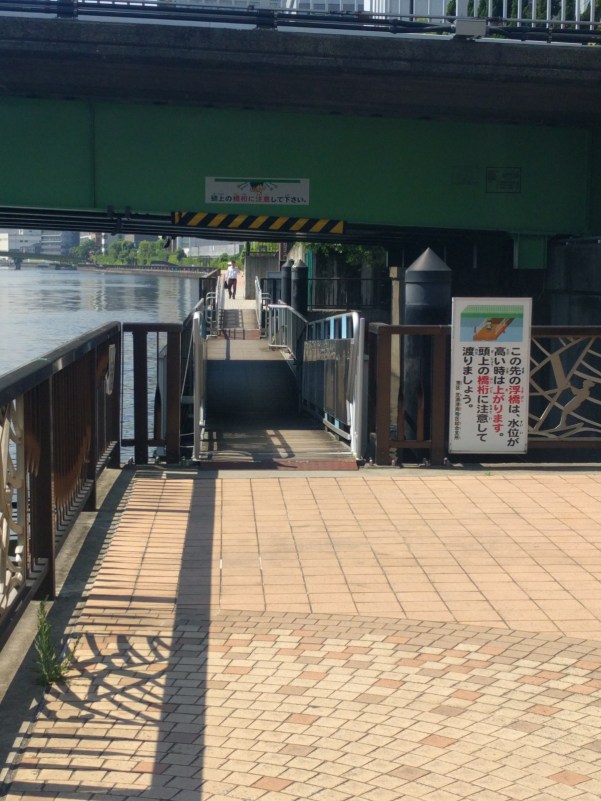
IMG_20180522_091413
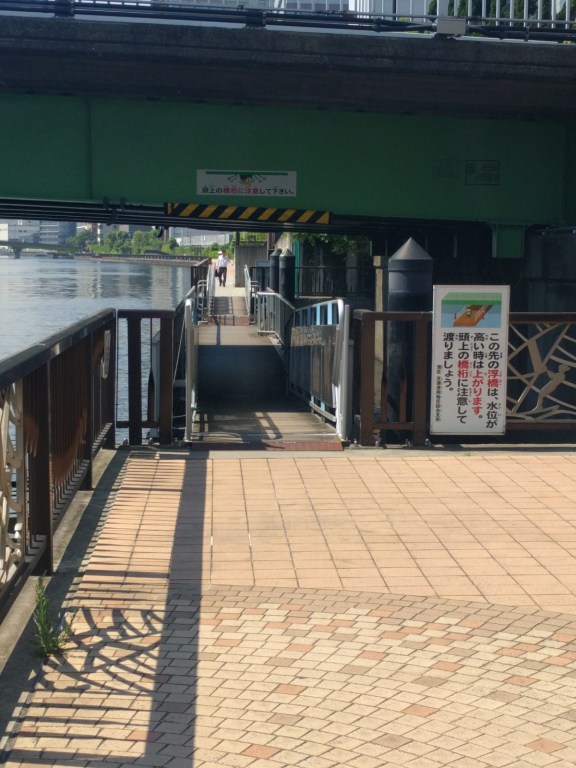
This is a floating bridge under the roadway bridge, and goes up and down with the tides. 
IMG_20180522_092417
I usually run about 2.5K down to this park, then take the pedestrian bridge in the photo to turn back toward home. More ducks and cormorants… 
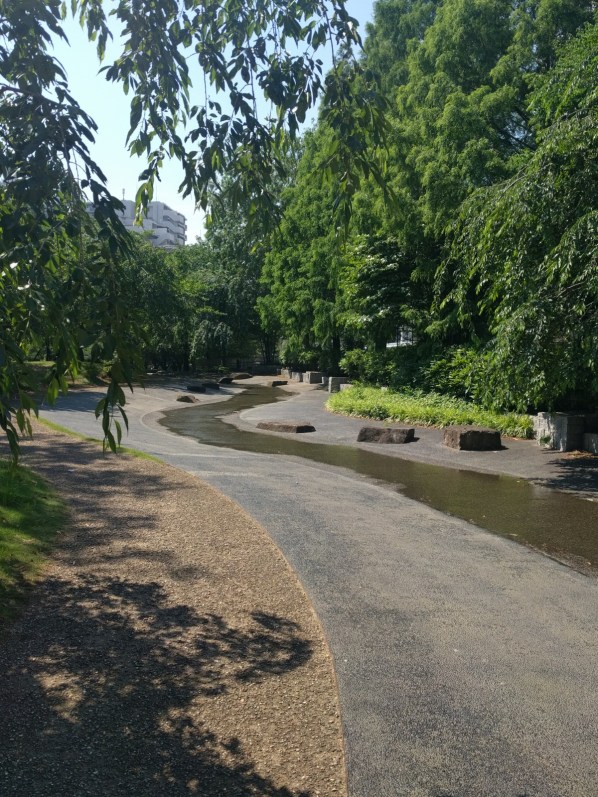
IMG_20180522_092545
This park was one of our grandson’s favorites when he visited with his mom and dad last month. It has a “river” that the kids all like to splash around in. 
IMG_20180522_092647
We call this the “Miffy Park” because of the sculpted topiary, and today I got to see the woman who keeps the bushes trimmed!
IMG_20180522_092745
Such a pretty little park to run through.
IMG_20180522_093009
Across the bridge and past the baseball fields…
IMG_20180522_093914
This part of my route runs along the street… with an elevated highway on one side, and the monorail tracks on the other.
IMG_20180522_094239
There is another park between the apartment high-rises. All the parks here have functional drinking fountains, and CLEAN and well-stocked restrooms… but no trash cans… And no trash.
IMG_20180522_094511_2
Day-cares and preschools bring the kids to the parks and along the canals almost everyday for playtime. The railings along the canals are all “kid-safe” so no one ends up in the canal.
IMG_20180522_094608
The monorail passing overhead at the park. This train goes all the way to Haneda Airport, and passes by our apartment every 4 minutes during the day.
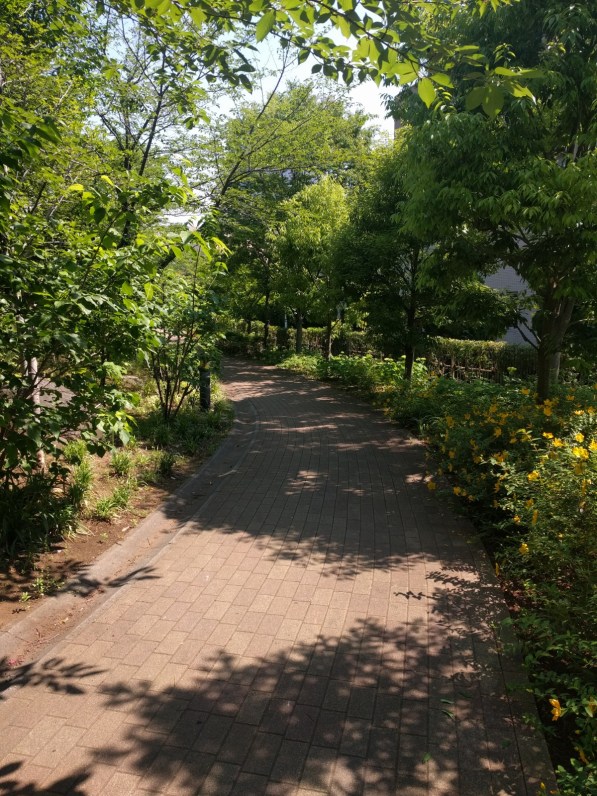
IMG_20180522_094719
After running through the park, I cross the street and run along this sidewalk back to the canal. Pretty azaleas today…
IMG_20180522_095055
Back on the canal (the other side) and heading toward home. The Japanese are very sun-conscious, and tend to cover up more when they run… even in the warm weather. All  the sunscreen I have seen here is SPF 50 or higher.

IMG_20180522_095138_2

IMG_20180522_095537
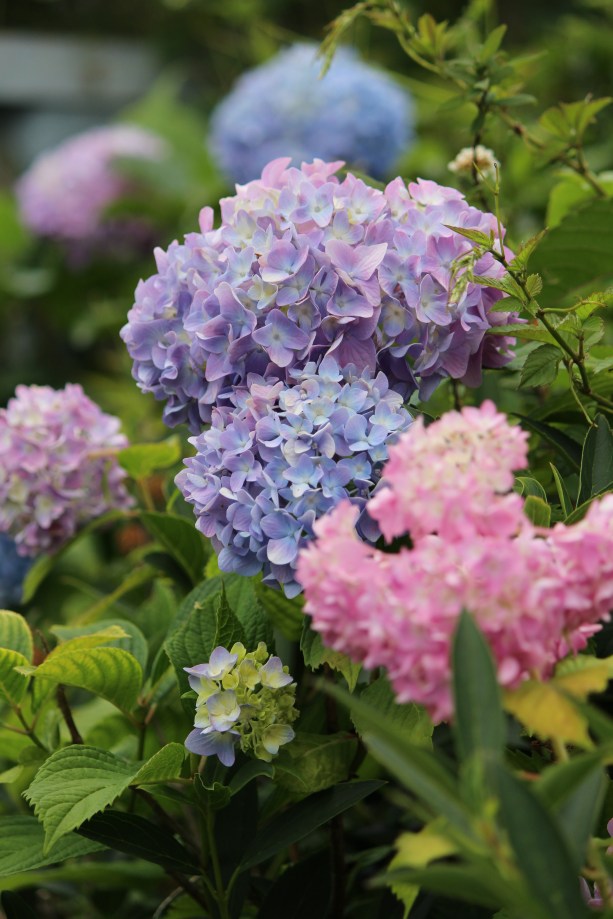
The walkway on this canal ends here in this pretty garden. The hydrangeas are all starting to bloom.
IMG_20180522_095645
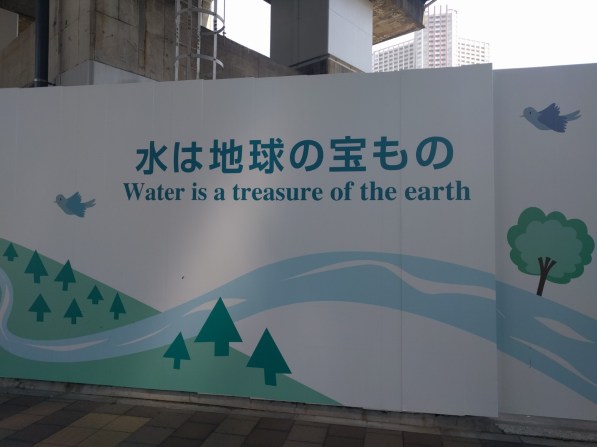
A construction wall along the street… with a nice mural.
IMG_20180522_095615
I really like the attitude that the Japanese people have toward nature and the environment. I wish everyone was so respectful of nature.
IMG_20180522_100456_2
One last loop around one of the smaller islands and then home again. I can see this spot from my apartment window. Under the monorail bridge they have nesting and roosting platforms for the water birds. Not many ducks stay here during the warmer months though. It is crowded with several species of ducks — and many cormorants — during the winter.

There are lots of places to run in Tokyo besides the canals where we usually run. Running is very popular here. We often see “running clubs” out and about on the weekends. There are many large parks and gardens to run in, and the outer perimeter of the Imperial Palace is almost exactly 5 kilometers, so it is often used for 5K runs and races (future blog post!) Down near the Imperial Palace, which is close to the Ginza and Shimbashi areas of Tokyo, there are actual running stores that provide shower and changing facilities for people to use during their lunch hours or after work. These stores will even rent shoes and running attire if you don’t feel like bringing your own from home. It is a nice fitness/exercise option for those workers who commute in from outlying parts of Tokyo.

So if you plan to visit Tokyo, make sure to bring your running shoes and try it out!


Nihongo ga wakari masu ka?

Nihongo ga wakari masu ka — Do you understand Japanese?

nihonedit
Japan, written in Kanji, one of three character systems use in Japanese writing.

After living in Tokyo for two-and-a-half years, I can answer sukoshi — a little. Far less than I would like. I somehow had the idea that if I were immersed in the culture, with a little study the language would just come to me.

Wrong.

Learning any foreign language is hard, particularly for someone like me who never really studied another language before. I grew up in the midwestern United States in the 1960s. My parents never traveled internationally…they seldom left our small midwestern city. I never considered the need to learn any other language. I was an American, and I spoke English. What more could I need? With some careful planning and scheduling, I managed to go all the way through college without ever taking a foreign language course. A fact I have since come to recognize as a huge mistake.

When I started to travel internationally nearly 20 years ago, I tried learning a little of the language where I would travel. Je parle un peu francais.  Ya nemnogo govoryu po russki. Hablo un poco de espanol. Perhaps because I once was pretty accomplished in music, I could memorize phrases fairly well. So I’ve learned to say a few things in several languages…just nothing that lets me have a reasonable conversation with a 5-year old in any language.

Then I came to Japan. A chance to study a bit more seriously. Actually be in the culture and use what I learn. And I have learned a lot. But still can’t have an intelligent conversation with a 5-year old. Maybe some day.

What I have learned is how to adapt to not being conversant in a language. I know enough Japanese to survive at the grocery store, restaurant, and occasionally I do have short and conversations in Japanese. Fortunately, the Japanese people are very patient with foreigners, and by mixing my limited Japanese, their limited English, and a lot of pointing and gesturing, things usually work out. Through this experience, I certainly have a lot more empathy for people who go to the US and don’t speak fluent English.

I’m still studying Japanese, and making slow progress. It’s an interesting language, and certainly challenging. Before I leave here, I hope to be able to have that conversation with a 5-year old. Just as long as he or she speaks very slowly.

How to be (a little) less Gaijin.

escalator
Simple rule in Tokyo — Stand on the left, walk on the right

In Japanese, the word for a “foreigner” is Gaikokujin, a somewhat formal term used by the government and news media. More informally, you’ll sometimes hear the term Gaijin, often used in connection with a foreigner who is mindlessly doing something that contradicts Japanese etiquette.

As a temporary resident of Japan, I try to avoid having Gaijin moments. Trying to understand the culture and avoid social faux pas is important any place, and particularly in a country that places such high value on manners and respect.

The following are some observations I’ve made to help avoid being labelled as a Gaijin.

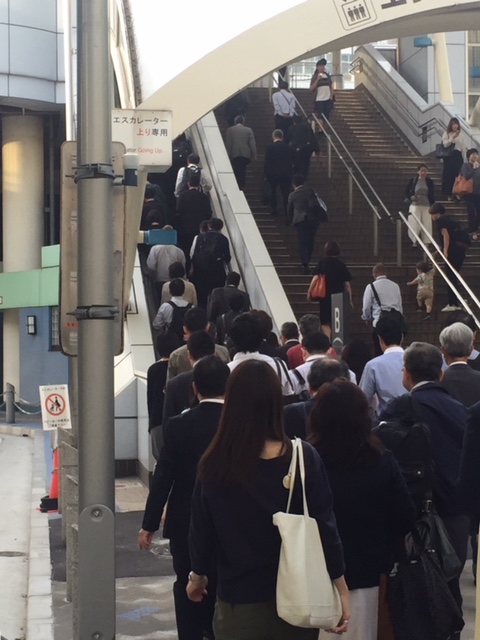
  •  Escalator etiquette. In Tokyo, it’s customary to stand on the left of an escalator, leaving space on the right for people who want to walk. It’s a sure Gaijin sign to stand on the right, or, more egregiously, to stand on one side and allow your luggage to block the other. But note that in Osaka and Kyoto, everyone stands on the right. I’ve read various reasons for the difference. When in doubt, be observant and follow the crowd. And also… be mindful of the queue. Don’t cut in line.
  • Train talk. The trains in Tokyo are often very crowded. But even with space at a premium, you’ll notice that the trains are very quiet. Seldom do you hear loud conversations, and there are signs that request that you mute mobile phones and avoid talking on the phone. Usually loud talking is coming from some Gaijin group, clueless that they are the only ones making noise.
  • More about trains. With space at a premium, you’ll see that locals in Tokyo do their best to be space-efficient. People sit in one space, and keep hands, feet, and other body parts from slopping into the next person’s space. That said, there are times during rush hours when your space and the next person’s space does tend to merge. I’ve found that there is never a full train in Tokyo. Just when you think another person can’t possibly get on board, five more people will push themselves in. At rush hour, there are actually official “pushers” – all wearing white gloves – stationed on the train platforms in order to “push” people into a crowded train so that the doors can close. About the only non-Gaijin way to react is to take a deep breath and try to think as skinny as possible… and try not to complain about being more up-close-and-personal with your fellow passengers than you might ever want to be.
  • Eating and drinking. Japan has a wonderful selection of food and drink. DSCF0981That’s the good news. For Westerners, the bad news is that it’s frowned upon to eat and drink while walking down the street – and smoking and walking is a definite no-no! Unless you’re at a festival, most of the time you don’t see people eating at places other than in restaurants, or just outside of a convenience store – and smoking is prohibited except for designated “smoking areas.”  And almost no one ever eats or drinks on the subways and city trains, which is probably one reason the trains stay so clean.
  • And speaking of clean… It is rare to find a public trash receptacle in Tokyo. They are almost non-existent. Yet, there is very little trash on the streets of Tokyo. Japan, overall, is probably one of the cleanest, least trashy countries you will ever see. Part of the culture here is respect for others. Throwing trash on the ground or in the streets is disrespectful to the millions of other people inhabiting this city – and this country – and hey… this planet! People take their trash with them until they can find a proper place to dispose of it. This would be a good lesson for the rest of the world… seems to me.
  • Schedules. The Japanese tend to be very prompt, and everything works on schedule. I once saw a news article where a train company was apologizing because a train left the station 20 seconds ahead of schedule. It’s a definite Gaijin moment if you arrive late to a meeting or other scheduled event.
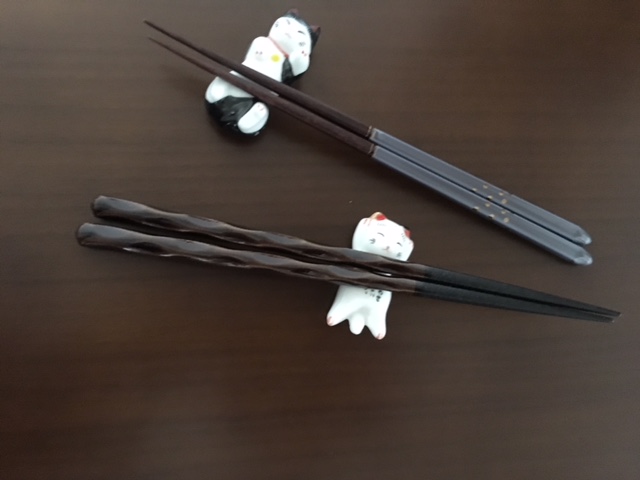
  • Hashi (chopsticks). Chopsticks are the normal utensils for eating in Japan, and they really aren’t hard to learn to use. But, it’s considered rude to pass food from one pair of chopsticks to another, or to grab a bowl with chopsticks and move it. Pointing at someone with your chopsticks is also bad manners. And don’t ever stand chopsticks upright into a bowl of rice, or make an “x” with them, as it is similar to a ritual performed at funerals and considered quite inappropriate.

IMG_2255

In the course of your time in Japan, you are bound to have a Gaijin moment or two. For the most part, Japanese people are tolerant and polite, and almost never criticize or vocally reprimand Gaijin behavior. As I continue to learn about this fascinating culture, I hope to learn some of the less obvious customs and practices. And with thought and a little good luck, I’ll keep the Gaijin moments to a minimum.


Ramblings on travel…

Recently, I’ve had an opportunity for several international flights. Although it’s always interesting to be in different places, the travel to and from can sometimes be tedious. Here are some random observations I’ve made during my recent travels. IMG_0223

  • Boarding an aircraft doesn’t have to be traumatic. Some airlines seem to delight in having a complicated, multi-phased boarding process. As a result, boarding seems to take forever. Others keep it simple, and people just get on the plane.
  • Business class is really nice. IMG_4258Normally, my company pays for the least expensive economy class tickets, and for our trips back to the US, we get premium economy. On rare occasions, when there are back-to-back international trips with no rest time in between, my company will provide business class tickets. It is much more comfortable. More space. Better food. And you can actually totally recline the seat to sleep. Very nice, but worth the thousands of dollars in extra costs? I’d have to say no.
  • Some people just can’t seem to avoid being annoying. When you jam several hundred people into a small cylindrical space, having common courtesy and respect for your fellow travelers is important. But for some, it is seemingly impossible. On a recent flight, one passenger talked incessantly from the time he was in line to board, throughout the 13-hour flight. His voice was several times louder than necessary to reach his seatmate. Even noise cancellation headphones — and the annoyed glances of his fellow passengers — didn’t stop the drone.
  • Flight attendants, by and large, do a good job. You sometimes hear about incidents where flight attendants have been real jerks. But in my experience, they work very hard to make flights as pleasant as possible. Crews on Asian airlines — JAL, Korean Air, ANA — are particularly courteous and hard-working.
  • Sometimes, the best travel choice isn’t an airplane. For travel inside Japan, the Shinkansen is a fast, smooth, and comfortable (although notIMG_4513 inexpensive) means of travel. We’ve also had good experience with the high-speed trains in Spain and South Korea. Using the train avoids all the inconvenience of airport security, and the trains tend to run right on schedule, particularly in Japan. Once on board, there is a lot of legroom and comfortable seating. One lesson we learned is to buy Shinkansen tickets a bit in advance on holidays. For one trip, we bought tickets with no reserved seats. Because it was a holiday weekend, there were no seats and we stood for an entire 90+minute trip across the countryside.

Travel often poses challenges, surprises, and downright inconveniences. I’ve found the best approach is to plan ahead, then be flexible and keep a sense of humor.  Things don’t always go as planned, and that can be annoying. But if you have the right attitude, you’ll find that the surprises and adaptations often make for the best stories to tell in years to come.