New Year’s in Japan

Today is New Year’s Day, and we are quickly approaching the end of our second year in Japan. The time has gone by amazingly fast, and we have enjoyed our time here immensely. IMG_5484

New Year’s Day is a family holiday in Japan. Many people travel to their family home to visit with relatives and spend the holiday together. It’s also a time to visit the shrines and receive blessings for a prosperous new year.

We spent the day today out and about, walking nearly 8 miles in the crisp cool air. Our first stop was to visit Zojoji Temple, near Tokyo Tower.

This temple also includes an area where street vendors provide all kinds of food and drinks, in a festive atmosphere. Zojoji is near our apartment, and is a place we visit often.

From Zojoji, we made a quick stop at a local convenience store – a conbini – to buy some water and soda. The convenience stores are open 24/7, 365 days in Tokyo, and are always a handy place to visit (and, importantly, can also be counted on to have clean and convenient restroom facilities).

Our walk then took us to Atago Shrine, a Shinto shrine established in 1603. Located 26 meters above sea level, you enter the shrine via a steep set of stairs.

Today, the grounds were crowded with people visiting the shrine. Atago is another of our favorite spots to visit within a walkable distance from our apartment.

Our day concluded with a visit to Hibiya Park, one of our favorite parks in Tokyo. Today it was surprisingly empty – with so many Tokyo residents visiting family and the shrines, this beautiful park was nearly vacant. But on a nice winter day, it was a pleasure to visit.

New Year’s Day is different here in Tokyo, and sometimes we miss our traditional celebration that we would normally have in the US. But today was a good day, and we’ll often look back with fond memories of New Year’s Day in Japan.

Random Thoughts…

The holidays are quickly approaching, and the end of 2017 is in sight. Last week we were in Paris (a business meeting for my husband) and next week we will be visiting back in the US for Christmas. Originally — as the blog name says — we were going to be living in Japan for two years. But as I mentioned recently, we have been extended for a third year here in Tokyo. Maybe it is time for a little “check-up” of our thoughts about living here…

All in all, we are very happy in Tokyo. My husband likes his job, and feels appreciated, and accepted by his Japanese (and Indian, Pakistani, South Korean, Chinese, Taiwanese, British… ) co-workers. He has learned a lot, and enjoys the work he is doing. He travels some — but not overly much — and sometimes I have the opportunity to travel with him. We have accumulated lots of skymiles (and let me tell you SkyPriority and airport sky lounges are a definite perk!)

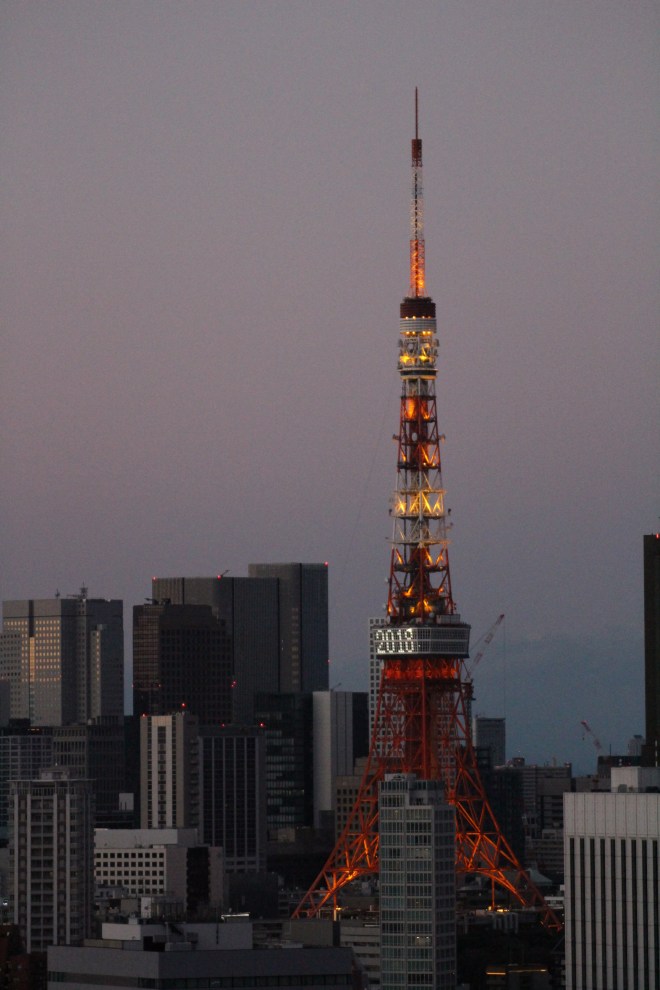
On the home-front here — my domain, since I am not employed here — things are fine. We like our (tiny) apartment. It is very comfortable, and has a great view of Tokyo Tower and part of the bay. I do miss my house in the US, and I miss my “stuff” sometimes. I definitely miss my car, and my kitties, and my family… but I am happy in my life here.

Just what is it specifically that we like about living in Japan? I think the thing that strikes us most about Japan is the kindness and respect that the Japanese people have shown to us. We are strangers here, with only a rudimentary grasp of the Japanese language, and yet they have been almost unfailingly kind and generous to us. They — by nature — are not outwardly, gregariously friendly. In fact, as a whole, the Japanese people are really pretty introverted. But yet, everyone we have gotten to know or have interacted with at all, has been very kind and polite to us… helpful, generous, and accepting. That has been really important to me — to us — as outsiders in a foreign country.

A few weeks ago, after our trip to South Korea, we took a few days vacation and traveled to Kyoto, Nara, and Hiroshima. Kyoto is about 3 hours southwest by Shinkansen, and is  the historic capital of Japan. We have been there a couple of times, and there is much to see. At Hiroshima, one of my husband’s business acquaintances spent two days showing us around the city and surrounding area. It was really amazing to get a personalized tour from someone who actually lives there. We saw and learned so much in those two days.

IMG_1628
The Atomic Dome in Hiroshima, Japan.

On our last night in Hiroshima, we walked to Peace Park to have one last look at the Atomic Dome. It was just after dark, and a little boy — probably about 5 years old — approached us and said “hello” in English. He asked us where we were from, and as we talked with him his mother pedaled up on her bike. In halting English, she told us that her son had been learning English in school. We tried to speak some of our limited Japanese with her, and in simple English to her son. Soon, the mother reached into her bag and pulled out two paper cranes. She said her son had folded them in school. She handed them to him to give to us. It was such a sweet and touching gesture — to share their symbol of “peace” with two strangers from a foreign country. It touched my heart.

IMG_1909
The paper crane is a symbol of peace in Hiroshima, Japan.

Several months ago, we spent a weekend in Nagano — a city to the north and west of Tokyo in the heart of ski country. We visited shrines and temples, and saw the snow monkeys soaking in the hot springs. Before we left to come back to Tokyo, we stopped in at a little shop to buy Japanese tea. As the woman packed up our purchases, she reached into a basket on the shelf and handed us this origami paper ball. She told us that her friend liked to fold the balls and had asked her to give them away to her customers in appreciation.

IMG_1908

I go to a spouse’s language and culture class at my husband’s company about three times per month. I have gotten to know women from many (mostly Asian) countries. Yesterday was a farewell class for two of our group who are soon returning to their home country of India. After the language portion of the class we had a party luncheon, and then a small cultural lesson on gift-giving.

IMG_1907
Noshibukuro — gift envelope

This is a paper gift envelope that I folded and decorated. It is called a noshibukuro. In Japan, it is very common to give money gifts in these folded envelopes. They are sold in all the stores, but many people opt to personalize them by making them themselves. At weddings, instead of buying a gift or household item for the couple, the Japanese usually give money. Likewise… they also give a monetary gift at funerals, birth of a child, New Year’s, and graduations, etc. The Japanese have a keen appreciation for beautiful things, and the wrapping of a gift is very much a part of the gift itself. They take great care and pride in packaging and wrapping gifts beautifully.

These things may seem to be pretty minor and insignificant in the grand scheme of things, but it is these small kindnesses — and I have many more examples — that have touched us the deepest. Small.Everyday.Kindnesses. I think we need more of these in our world.

Finishing up Thanksgiving in Japan

We’re coming to the end of Thanksgiving Weekend in Japan. Although it has been very different from what we were used to in the US, it has been a good weekend.P1060309

We started with a quiet Thanksgiving day. We miss the big dinners with all the family. Here, it was just the two of us spending a quiet day at home. No big turkey and dressing meal, either…but we did go to our favorite sushi restaurant, and had a very tasty Thanksgiving sushi dinner!

Black Friday was also uneventful. We did do some shopping, trying to replace a DVD player that we brought from the US that has now worn out. Unfortunately, it’s very hard to find a “region free” DVD player that will actually play our US DVDs. No luck, so we’ll have to buy one on the next trip to the US.

Saturday, we visited one of our favorite hiking spots, Mt. Takao, about an hour’s train ride from Tamachi station. An associate from work went with us to hike up the mountain. And, we found, a multitude of Japanese residents also had the same idea – the station at Takaosanguchi was packed with people.

Fortunately, most wanted to take the tram to the top of the mountain, and we found the hiking trail not so busy. It was a very nice hike, with a clear view of Mt. Fuji at the top.

Sunday we started the day with a 4-mile run. We intended to run over the Rainbow Bridge, but found when we got to the bridge that the path didn’t open for another hour. Undaunted, we changed our route and had a nice run through the neighborhood around our apartment. Later, we visited Koishikawa Korakuen Garden, a garden in the Bunkyo ward of Tokyo that we hadn’t visited before. Must have been a good choice, as the line to get in was rather long. However, after a few minutes wait, we found a beautiful garden.

Many Momiji trees – Japanese maples. Momiji viewing is a popular activity here in the fall. Vibrant colors this time of year. Also ducks, herons…a wonderful garden in the middle of the city.

Our afternoon ended with some craft beer, and ramen noodles at our favorite ramen shop in Shibuya.

All in all, it was a different kind of Thanksgiving weekend compared to what we would have done in the US. But it was one we found very rewarding.

Thanksgiving in Japan

It’s the “he” part of the blog team, and today we’re celebrating Thanksgiving in Japan.

IMG_1797Well, sort of. Although it’s Thursday, November 23 here, we’re 14 hours ahead of the US…so, actually the US Thanksgiving holiday hasn’t yet begun. However, in Japan, November 23 is an annual national holiday — Labor Thanksgiving. It just so happens that this year, the calendar aligns both holidays on November 23.

Labor Thanksgiving has its roots in centuries-old tradition in Japan. As far back as 660 B.C., this was a celebration of the fall harvest – rituals were held, and people also used the event to reflect on the year’s work.

By 1948, Japan had evolved from an agrarian society to an industrial nation. The holiday shifted more toward recognition of laborers. The modern holiday is also linked to the new Japanese constitution after World War II, which provided a new level of protection for human rights of the workforce.

Today, many businesses are closed on Labor Thanksgiving Day, and it’s common for the Japanese people to gather for a meal with their family. Unlike in the US, the day isn’t focused on a large feast. Instead, people enjoy a normal meal with friends and family.

For us, Thanksgiving is one of those times when we find ourselves missing the United States. For most of our adult lives, Thanksgiving was time when the family gathered and enjoyed a great meal. I think back on all those years and the wonderful times we had…it’s hard not to feel a bit of nostalgic yearning for the good old days.

Although we’ll miss our family gathering for Thanksgiving, we look forward to a trip back to the US in December, to celebrate the holidays and be together with our family again. As for today, my wife and I will likely celebrate Labor Thanksgiving with a delicious meal…of sushi and sake.

Happy (Labor) Thanksgiving?

For the most part, I am really loving this expat life here in Tokyo… the adventure, the travel, and the new experiences. We have done a lot, seen a lot, and learned a lot in these past (almost) two years. This has been — and continues to be — one of the greatest experiences of our lives. But… it can have its difficulties.

This week is Thanksgiving week back home, and everyone there is in the midst of holiday preparations and planning for the family get-together on Thursday. I see photos of food and table decorations, I hear of travel plans and parties… and we will be missing all of that this year.

I am not asking for pity… I knew what I signed up for when we came here. It is a trade-off, and you have to take a bit of the bad with the good. We may not have our big Thanksgiving cooking/eating/food fest, and we won’t be physically together with our family, but we will have our virtual get-togethers via the internet. I can’t cook a turkey here… or even a pumpkin pie (no oven!), but we will manage, and will have a nice meal anyway (sushi, anyone???)

Japan has “Labor Thanksgiving Day” every year on November 23rd. This year, that holiday happens to coincide with the US Thanksgiving Day, so my husband will actually have a day off from work. Here, it is a national holiday commemorating labor and production, and giving thanks to workers.

The Japanese are interested in US holidays and customs, and there are many restaurants that advertise “traditional Thanksgiving dinners” with all the “fixings”, and other places that will prepare the holiday meal for take-out to serve at home with friends and family. Most of these places are in the areas that are more highly populated with US expats… Roppongi, Akasaka, and other areas around the US Embassy. The big chain restaurants from the US — like Hard Rock Cafe — will also have Thanksgiving menus that day.

It will be a nice holiday here, but not the same as at home — no blazing fireplace, no Macy’s Thanksgiving Day Parade or football games (!) on the TV. But, it will be nice none-the-less. We will think of our family and friends back home, and be… thankful! We will miss you all. But know that you are with us in our hearts and minds.

Oh… and, by the way… I know that the blog is titled “Two Years in Japan” and we are nearing the end of two years here, but we have been officially extended to three years. So… keep reading. More blogs to come…

International travel

It’s the “he” part of the blog team, and today I’m writing about international travel from Japan.

As often as possible, my wife joins me on international trips. On this trip to Mumbai, India, that wasn’t possible so I’m going solo.

I’ve learned that just about any trip from Japan is a long one – with the exception of  places like South Korea and China. My trip to Mumbai is about 10 hours. Trips to Europe and the US are at least as long, crossing multiple time zones.

Today, I started by walking from our apartment to Tamachi Station, then taking the subway to Shinagawa Station to catch the NEX – the Narita Express to Narita Airport. The NEX is a fast, comfortable, high-speed train. Nice comfortable seating, space for luggage. At 3900 yen, it’s more expensive than the subway – but it is a great way to go to Narita.

NEX

Except today, my train didn’t arrive.

For some reason, the 8:19 train I was scheduled for didn’t come. There were a number of announcements over the PA system, but all in Japanese and too much, too fast for me to recognize. So, ticket in hand, I went to the JR Rail office to see what had happened. Unfortunately, the staff there spoke little English – I got the idea that the train I was supposed to be on was cancelled, and it was possible for me to take a different train to another station, then transfer. But ultimately, I asked for rescheduling on the next NEX, which was to come at 8:49.

After some discussion, I was sent to another JR Railways ticket office to exchange my ticket. After waiting in line a few minutes, I found myself at the ticket window with a very friendly ticket agent. Between his marginal English and my little Japanese, I was able to get reassigned to the next NEX train. And, fortunately, this train arrived as scheduled.

However, things don’t always go as planned. It seems the seat I had been reassigned was already occupied. What to do? I decided rather than try to get my assigned seat, I would just take another seat that was empty across the aisle. Fortunately, that worked – on the next stop, several people got on the NEX, but none were assigned my adopted seat. I was safe for the remainder of the trip to Narita.

Once at Narita, check-in was smooth and easy. There was no line at the ANA ticket counter, and the friendly ticket agent checked me in and took my bag. She spoke a little English, and I did my best in Japanese. I was checked in, an on my way in just a few minutes.

suitcaseNarita is always a pleasure to go through. Security was smooth and efficient, and it took only a few minutes to go through Immigration. The Immigration person was very friendly, and I even recognized her question in Japanese about when I would return to Japan. Ju-hatchi. And with that, I was on my way to the gate.

The rest, as they say, is history. At the gate, they called my name to come to the ticket counter and verify my Indian visa. No problem there, and soon it was time to board. ANA – like other Japanese airlines – has a smooth and efficient boarding process. It’s so easy here. Hard to understand why boarding can sometimes be such an ordeal on US airlines.
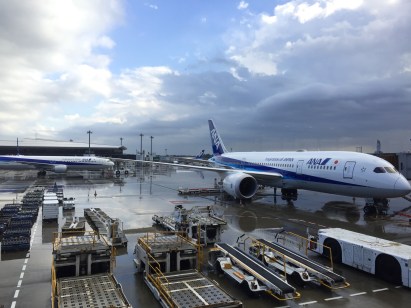
ANA at airportMy trip to India is still ahead of me. India is a fascinating place, and this will be my third experience there. This time, I will go outside of Mumbai for the first time. I’m sure it will be an interesting trip.

Overall, I have found that travel from Japan is invariably long, and the trips are often tiring. But the Japanese do their best to make travel efficient and pleasant. From the friendly ticket agents at the check-in area, to the immigration officers, to the flight attendants, the Japanese are consistently efficient and friendly, and try to make travel as painless as possible. I greatly appreciate their efforts.

Waiting for the typhoon.

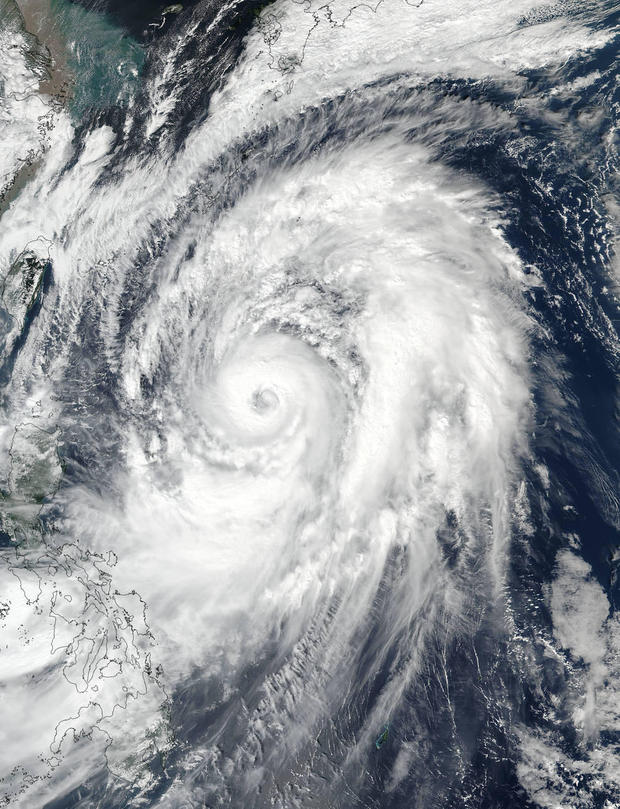
typhoon-lan-japan-2017-10-20

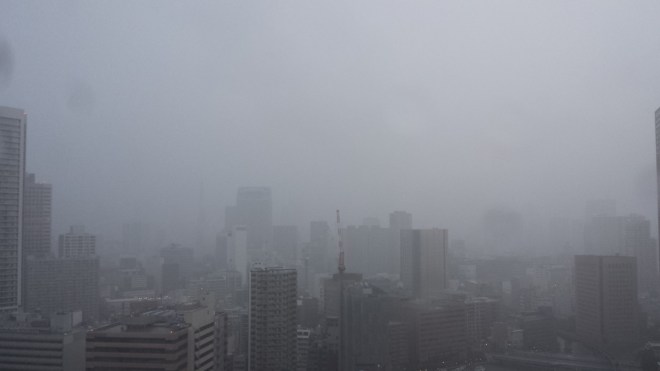
Japan is bracing for the arrival of Super Typhoon Lan. Lan has been spinning in the Pacific for several days, but now is headed toward Japan. It should reach the southern islands — including Okinawa — within the next 24 hours. The main Island of Honshu — where Tokyo is — will be impacted within 48 hours and Hokkaido will be brushed as Lan turns more easterly in about 72 hours. This is the strongest typhoon we have had so far this year. We had several storms last fall — including 5 small ones within a two week period — but I think this will be the strongest storm we have experienced since moving to Japan.

We both use The Weather Channel app on our phones for weather information here in Japan, but sometimes it is pretty hit and miss. I can’t help but think that TWC focuses more on US weather than on the weather here in Japan. We do get alerts and warnings from the US State Department, and we both received email about this storm with links to the Japan Meteorological Agency.

Last we checked, top winds for this storm would be about 135 mph… but by the time the storm reaches Tokyo on Monday, the winds are expected to be more in the 40 to 60 mph range. Total rainfall for our area is predicted to be about 10 inches or so… and a possible storm surge of 3 to 5 inches. Last years storm winds produced a noticeable swaying here in our high-rise apartment building. It will be interesting to experience a storm of this magnitude.

But — no one here in Tokyo seems to be particularly alarmed about the storm. As far as I know there are no evacuations or warnings out for our immediate area. There will be strong winds, and heavy rains, that will no doubt disrupt travel for the Monday morning commutes to work. My husband has been told to watch the weather, and not take any chances getting to the office on Monday. We can see his office from our apartment. It is a short walk, but even a short walk in those weather conditions could be hazardous. No doubt those employees commuting in on the trains will not be able to get there, or will at very least be delayed.

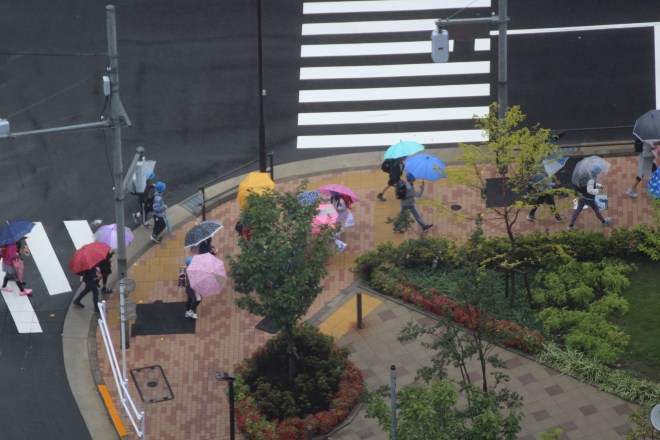
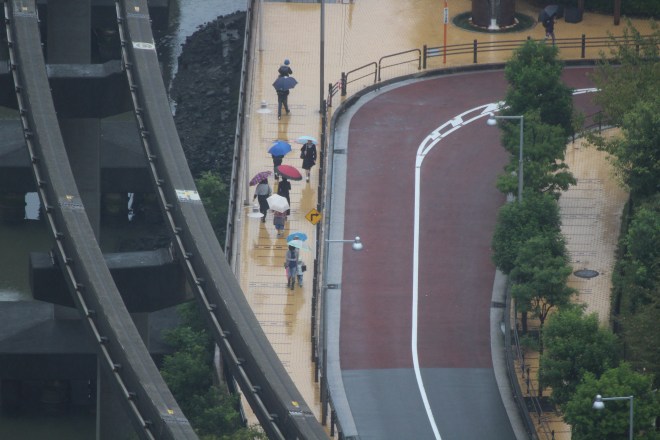
Other than that… it seems business as usual. Raingear is taken very seriously here, with most people on foot (without access to cars.) We all have raincoats, boots and serious umbrellas. Everyone has an umbrella. Even small children carry there very own umbrella… no sharing. Despite the weather, people still have to get out and about to the store, to work, to school. Wearing raingear, and having access to an umbrella is a routine part of life living in this urban area. Something that we often neglected when we lived in the US and had our warm, dry cars to travel around in.

IMG_0857IMG_0855

It has been raining here since we got back from South Korea day before yesterday, and looks like we still have another two or three days of wet weather to come. We will be keeping the umbrellas handy.

20160820_052117

Annyeong, South Korea

It’s the “he” part of the blog team, writing from the Korean Air lounge in Busan, South Korea. For almost two years, I’ve lead a team preparing for a large international conference to be held in Gyeongju, South Korea. The meeting was held this week…it went well, and now for the most part, it is over.

The colleagues I’ve worked with in Korea have become friends. We’ve gone beyond the cultural differences, and even worked through the language difficulties. We now have a mutual respect that has turned to a genuine interest in each other as people.

Now, as I prepare to board the plane from Busan for probably the last time, I look back on this time as an outstanding opportunity. I’ve been able to see another culture, and become familiar with a part of the world I never dreamed I would experience. It has been a touching experience, and I must say I feel a great sadness that this part of my life has passed.

With the world situation today, I fear what the future could bring for my Korean friends. I can only hope that some sense of reason will prevail, and we will get through these times safely.

So for now, I say annyeong — goodbye — to Korea. It is a place and a people I have come to enjoy and appreciate. I look forward to returning to see my friends sometime in the not too distant future.

Water and Wildlife…

I love Tokyo. And, I love the area of Tokyo where we live. Even though we live in a 30-floor apartment tower surrounded by many other — and bigger — apartment towers, our “neighborhood” is very residential. Children walk along the sidewalks on their way to school, there are moms with babies and toddlers on bikes, in strollers and baby packs. Workers walk to their offices. People are running and jogging, and walking their dogs. It is very quiet and peaceful.

This part of Tokyo is all built up on artificial islands — land that has been reclaimed from Tokyo Bay — and many of these islands are separated by canals. I love to walk and run along these canals. Most of the islands have walkways built alongside the canals with plenty of places to sit and relax. It is a popular place for people to take their lunch or have a break. It is IN the city, yet it doesn’t feel like it is IN the city.

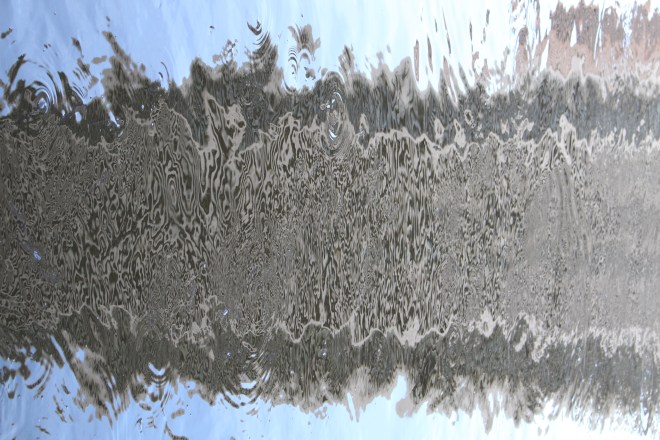
I have started taking photos of the water in the canals. Something about the inky darkness of the water breaks the reflections of the buildings and bridges into interesting patterns of shapes and colors. I never really noticed this about water before, and just stumbled upon it because it showed up in the photos I took of the ducks and wildlife along the canal. So… here you go… Just a few of my favorites.

IMG_0085
This was actually taken along the Meguro River, with the sun reflecting off the swirling water.
IMG_0575
Turned this one sideways… liked it better that way.
IMG_0590
Love the blue…
IMG_0592
And the circles.

Let’s add some wildlife… ducks in these photos, but we see heron, egrets, cormorants, seagulls, and pigeons. There are turtles, and lots of fish — some of the fish are more than two feet long. We also see jellyfish in the brackish water of the canals.

IMG_1854
Northern Pintail
IMG_1855
And another… I like the flashes of green in the water. the bridge he was swimming under is green and reflected on the water.
IMG_1866
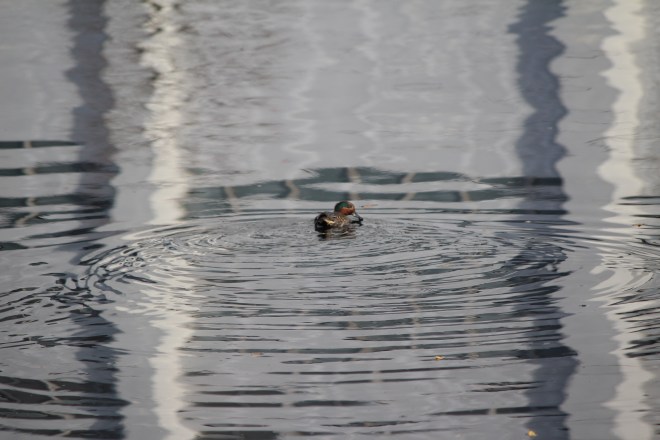
This is a Teal. And you can almost see the windows of the building reflected in the water.
P1020870
Spot-bill Duck. The ducks here have their seasons… Spot-bills are here in the summer, and raise their babies on the canals. They leave in the fall, and the other ducks come back for the winter. In the winter we see about a dozen different species of ducks.
P1020871
Spot-bill.
P1020889
This is a Tufted Duck… black and white, but the head is actually a very dark purple. Note the patterns in the water.
P1030338
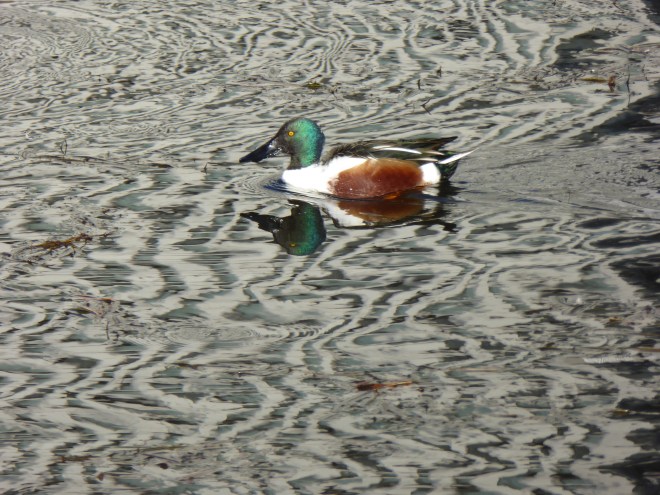
Northern Shoveler — the water is almost as colorful as the duck. Can you tell why he is called a “shoveler”…lol.
P1030346
And another shoveler — and interesting patterns in the water.
P1030370
Tufted Duck.
P1030373
And now you can see his “tuft”…
P1030376
And this Tufted Duck sitting in the colored swirls of water. The sky and the high-rise buildings around the canal made these colors.

Adoption in Japan

No, we aren’t really going to adopt children, or even pets, in Japan. But we are adopting … or rather collecting… Kokeshi dolls. We started when we saw one at a festival, and decided to buy it. After that, it has started to become sort of an obsession.

IMG_3252.JPGKokeshi dolls are wooden figures, many of them decades old. They were originally produced by onsen public baths as souvenirs in the Tohoku region in Japan. They have unique sizes, shapes and each one has a different face. Different locations have different kinds of faces. It’s fascinating to see these, and they are plentiful at flea markets.

There are may kinds of things that people can buy as souvenirs of Japan. For us we will have some Kokeshi dolls as a remembrance of our time in Japan.